







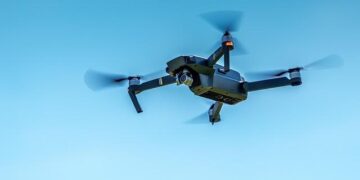




In an era where the sky above is as dynamic and contested as the ground below, the rise of drone technology presents both remarkable opportunities and complex challenges. Recognizing the urgent need to balance innovation with security and personal privacy, the Joint Interagency Task Force 401 (JIATF 401) has taken a decisive step forward. Recently, the U.S. Department of War unveiled a comprehensive guide aimed at navigating the evolving landscape of counter-drone technologies alongside essential privacy protections. This pioneering publication seeks to equip government agencies, private sector partners, and the public with a clear framework to address the multifaceted implications of unmanned aerial systems, marking a significant milestone in national defense and civil liberties dialogue.
JIATF 401 Unveils Comprehensive Framework for Counter-Drone Strategies
In a decisive move to strengthen national security and safeguard civil liberties, JIATF 401 has introduced a robust blueprint that harmonizes cutting-edge counter-drone technologies with stringent privacy protections. This pioneering framework outlines tactical integrations of radar systems, radio-frequency jamming, and AI-driven threat detection mechanisms, all designed to neutralize unauthorized drone incursions swiftly and effectively. Emphasis is placed not only on interception capabilities but also on a comprehensive legal and ethical approach ensuring that surveillance and interdiction efforts remain transparent and accountable.
The guide further delineates essential operational standards, encapsulated in the table below, highlighting core elements for successful deployment across military and civil institutions. Stakeholders are encouraged to adopt these best practices to foster a secure airspace without compromising individual freedoms.
| Key Component | Description | Privacy Consideration |
|---|---|---|
| Detection | Multisensor arrays combining radar and RF analyzers | Minimal data retention; anonymized signals |
| Interdiction | Non-lethal jamming and capture nets | Targeted neutralization; avoid collateral disruption |
| Data Management | Encrypted storage and access logs | Strict access controls; user consent protocols |
| Compliance | Regular audits and transparency reports | Oversight by independent privacy boards |
- Integration of AI analytics improves threat classification with minimal human bias.
- Collaborative frameworks between federal agencies enhance real-time information sharing.
- Public awareness campaigns promote community understanding of counter-drone measures.
Balancing Innovation and Privacy Protections in Emerging Drone Technologies
As drone technologies continue to evolve rapidly, integrating cutting-edge innovations while respecting individual privacy rights poses a significant challenge for policymakers and industry leaders alike. Advanced counter-drone systems must not only detect and neutralize unauthorized aerial threats but also ensure compliance with strict data protection standards. This dual mandate calls for a harmonized approach, combining robust technical safeguards with transparent operational protocols that uphold civil liberties. By fostering partnerships between government agencies, private sector innovators, and privacy advocates, the evolving landscape can be navigated responsibly and effectively.
Key strategies to achieve this balance include:
- Selective data capture: Limiting the scope of surveillance to only what is necessary for security purposes.
- Real-time anonymization: Masking personally identifiable information during live monitoring to prevent misuse.
- Regulatory compliance checks: Regular audits and oversight to ensure adherence to privacy laws and ethical standards.
- Community engagement: Involving the public in conversations about acceptable uses and safeguards.
| Innovation Area | Privacy Risk | Mitigation Approach |
|---|---|---|
| Facial Recognition | Unauthorized identification | Data minimization, encryption |
| Automated Tracking | Persistent surveillance | Time-limited data retention |
| Data Sharing | Unauthorized access | Strict access controls |
Key Recommendations for Implementing Responsible Counter-Drone Measures
To ensure effective and ethical deployment of counter-drone technologies, it is essential to prioritize transparency and accountability at every stage. Agencies should establish clear protocols for detecting, identifying, and neutralizing unauthorized drones, while simultaneously safeguarding civil liberties. Collaborative engagement with local communities, industry stakeholders, and privacy advocates fosters trust and promotes compliance with legal frameworks. Additionally, operators must be rigorously trained not only in technical capabilities but also in understanding the limits imposed by privacy laws and operational boundaries.
Operational success hinges on a multilevel strategy that balances security with individual rights. Key recommendations include:
- Implement tiered response systems that escalate actions based on threat level, preventing unnecessary use of force.
- Regularly update and audit technology to adapt to evolving drone capabilities and emerging privacy considerations.
- Conduct ongoing risk assessments to identify potential collateral impacts on civilian infrastructure and data protection.
- Foster interagency cooperation to unify efforts across federal, state, and local levels.
| Recommendation | Core Benefit |
|---|---|
| Transparency protocols | Build public trust |
| Tiered response | Minimize collateral damage |
| Regular audits | Adapt to new threats |
| Interagency collaboration | Unified defense posture |
To Conclude
As drone technology continues to soar in both capability and accessibility, the release of JIATF 401’s Guide to Counter-Drone Technology and Privacy Protections marks a pivotal step in balancing innovation with security and individual rights. By providing clear frameworks and practical insights, this publication empowers agencies and organizations to navigate the complex skies of modern surveillance and defense responsibly. In an era where the line between technological advancement and privacy is ever-shifting, such guidance not only strengthens our defenses but also underscores a commitment to safeguarding the freedoms that define us. The conversation around drones is far from over, but with tools like this guide, stakeholders are better equipped to chart a course that respects both safety and civil liberties.