






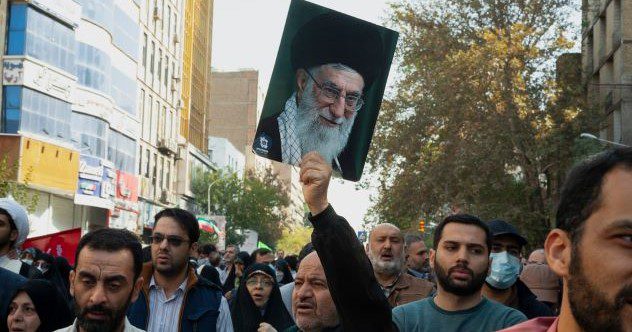
In many parts of the world, religion and politics are closely connected, shaping the social, cultural, and legal frameworks of nations. Religious beliefs influence political decisions in various areas of governance, from lawmaking to the behavior of public officials. In some countries, the separation between religion and state is unclear, creating a unique interplay affecting all aspects of life. Here, religious leaders often wield significant influence over political matters, and religious doctrines can shape policies on education, gender rights, and freedom of expression.
Related: 10 Strangest Methods Of Government In History
10 Bhutan
The World’s Only Buddhist Kingdom: Bhutan Explained
Bhutan, a small Himalayan kingdom, is unique in its integration of Buddhism into its governance. The country follows a form of Mahayana Buddhism, specifically the Drukpa Kagyu school, which deeply influences its laws, culture, and daily life. The Druk Gyalpo, or King of Bhutan, is not only the political leader but also the spiritual protector of the nation. This dual role emphasizes the importance of Buddhism in shaping Bhutanese identity and guiding its policies. The constitution of Bhutan explicitly promotes Buddhism, and its principles are evident in various state functions and public policies.
The Bhutanese legal system incorporates Buddhist principles, aiming to promote peace, compassion, and social harmony. Traditional Buddhist values, such as non-violence and respect for all forms of life, are embedded in the nation’s legal framework. For instance, the government actively promotes Gross National Happiness (GNH), a development philosophy prioritizing spiritual and mental well-being over economic growth. GNH reflects Buddhist values and is used to assess the impact of policies on the overall happiness and well-being of the population.
Additionally, the state supports and oversees religious institutions, ensuring they align with national goals and values. Monasteries and monastic education receive government funding, and monks often play significant roles in community decision-making.[1]
9 Iran
How Iran’s repression machine works
Iran is an Islamic Republic where the intertwining of religious and political authority forms the core of its governance. After the 1979 Iranian Revolution, the country’s political system became deeply rooted in Shia Islam, particularly the Velayat-e Faqih (Guardianship of the Islamic Jurist) doctrine. This doctrine gives significant power to the Supreme Leader, a religious figure with ultimate control over the government, military, judiciary, and media. The Supreme Leader is chosen by the Assembly of Experts, an elected group of clerics, and serves for life unless found unfit.
Iran’s government has both elected and unelected parts. While there are democratic elements like the President and Parliament, the Supreme Leader and the Guardian Council hold substantial power. Iran’s legal system is based heavily on Sharia law, affecting criminal, civil, and family laws. The judiciary, led by the Head of the Judiciary appointed by the Supreme Leader, enforces these laws, blending religious principles with state governance.
This theocratic system has led to strict social policies, including dress codes and limits on freedom of speech and assembly, to maintain the nation’s Islamic character. Despite occasional calls for reform and modernization, Iran’s government remains deeply influenced by its religious ideology.[2]
8 Brunei
Brunei – The Last Absolute Monarch | Asia’s Monarchies Documentary
Brunei, officially known as the Nation of Brunei, is a small but wealthy absolute monarchy located on the island of Borneo in Southeast Asia. The country is ruled by Sultan Hassanal Bolkiah, who holds ultimate authority over all state affairs, including religious matters. In Brunei, Islam, specifically the Shafi’i school of Sunni Islam, is the official religion, and the legal system is heavily influenced by Sharia law. This religious integration into governance is exemplified by the implementation of the Syariah Penal Code Order, which introduced strict Islamic laws and punishments, including amputation, stoning, and flogging for various offenses.
The Sultan’s decision to implement the Syariah Penal Code was met with international condemnation and calls for boycotts, particularly from human rights organizations and Western governments. Critics argue that the code violates fundamental human rights, including freedom of expression and religion and prohibiting cruel and unusual punishment. Despite this, the Sultan has defended the implementation as reflecting Brunei’s values and commitment to Islamic principles. The code applies to both Muslims and non-Muslims, although certain punishments are reserved specifically for Muslims.[3]
7 Eritrea
Leaks from Eritrea, Africa’s North Korea
The Eritrean government officially recognizes only four religious groups: the Eritrean Orthodox Tewahedo Church, Sunni Islam, the Roman Catholic Church, and the Evangelical Church of Eritrea. This official recognition significantly influences the religious landscape, as any religious practices outside these sanctioned groups are not permitted and are subject to strict regulation and control by the state.
The Eritrean government keeps a firm grip on religious practices, often saying this control is needed for national unity and security. The Office of Religious Affairs oversees religious activities, and all recognized religious groups must register and provide detailed information about their operations. This includes the names of members, financial records, and property holdings. The state has been known to intervene in choosing religious leaders, further strengthening its influence over religious institutions.
Members of unrecognized religious groups, particularly evangelical Christians and Jehovah’s Witnesses, face severe penalties, including imprisonment, harassment, and torture. Reports from human rights organizations such as Amnesty International and Human Rights Watch document numerous cases of individuals being detained for their religious beliefs, often without formal charges or trials.[4]
6 Somalia
Exclusive: Somalia government will become ‘weaker’ unless they take out Al Shabaab
Somalia, located in the Horn of Africa, has a legal system deeply intertwined with Islamic principles. The provisional constitution of Somalia, adopted in 2012, establishes Islam as the state religion and mandates that all laws must comply with Sharia law. This integration of religion and state is evident in various aspects of governance, where Sharia law influences both civil and criminal legal matters. For example, Sharia courts operate alongside secular courts to adjudicate cases, particularly those related to family law, inheritance, and personal disputes.
The Somali government, while officially endorsing a federal parliamentary system, faces challenges in extending its influence across the entire nation due to the presence of various autonomous regions and militant groups like Al-Shabaab. Al-Shabaab, an extremist group with strict interpretations of Sharia law, controls large swathes of territory in southern Somalia and imposes its own harsh version of Islamic law, including public executions, amputations, and stoning for crimes such as theft and adultery. This group’s influence further complicates the legal landscape in Somalia, making the application of Sharia law uneven and often brutal in regions under their control.
Social norms and practices in Somalia are heavily influenced by Islamic traditions, impacting areas like dress codes and dietary rules. Islamic education is also emphasized, with many schools including religious studies in their curriculum.[5]
5 Pakistan
Why Pakistan Is In Trouble
Pakistan, established in 1947, was created as a separate nation for Muslims of the Indian subcontinent. The country’s legal and political system is closely linked with Islamic principles. The constitution of Pakistan declares Islam as the state religion and requires that all laws be consistent with the teachings of Islam as stated in the Quran and Sunnah. Both the President and Prime Minister of Pakistan must be Muslims, and the Council of Islamic Ideology is an advisory body set up to ensure that laws comply with Islamic rules.
Sharia law has a major influence on Pakistan’s legal system. The Hudood Ordinances, introduced in 1979, enforce Sharia punishments for crimes such as theft, adultery, and false accusations of adultery. These laws have been controversial and criticized, particularly for their impact on women’s rights and their enforcement. Besides the formal legal system, informal and traditional dispute resolution mechanisms, like jirgas and panchayats, often use Sharia principles, further embedding Islamic law in society.[6]
4 Sudan
Sudan’s conflict, explained
Historically, under President Omar al-Bashir from 1989 to 2019, Sudan used Islamic Sharia law as the foundation for its legal system. During his regime, Sudan was an Islamic state where Sharia law governed many aspects of both public and private life. This included strict regulations on dress codes, public behavior, and severe punishments for crimes like theft and adultery, aligning the legal system closely with Islamic principles. Sharia law also influenced the country’s educational and social institutions, embedding Islamic values deeply in Sudanese society.
After Omar al-Bashir was ousted in 2019, Sudan’s political scene began to change. A transitional government promised reforms and a greater separation between religion and state. Despite these promises, the influence of Islamic law remains significant, particularly in regions controlled by conservative factions. The transitional government initially made efforts to abolish some of the harshest Sharia-based laws, such as those imposing the death penalty for apostasy and public flogging.
However, the recent military coup in 2021 has created uncertainty about the future of these reforms. The return of military rule has raised concerns about a possible return to stricter Islamic governance, as military leaders might seek support from Islamist factions to strengthen their power.[7]
3 Yemen
What’s going on in Yemen and is the war getting worse? | Start Here
Yemen’s constitution designates Islam as the state religion and requires all laws to be based on Islamic Sharia. This reflects the cultural and religious values of Yemen’s majority Muslim population. The constitution also mandates that the president must be a practicing Muslim. Public policies and state practices are deeply rooted in Islamic traditions, impacting everything from education to judicial procedures.
The ongoing civil conflict in Yemen has complicated the relationship between religion and the state. The conflict involves various factions, including the Houthi movement, which adheres to Zaydi Shia Islam and controls large parts of the country, and the internationally recognized government, which follows Sunni Islam. This division has led to a fragmented application of Sharia law, with different interpretations enforced in different regions.
Houthi-controlled areas, for example, have seen stricter implementations of Sharia, affecting women’s rights and public freedoms. The instability and humanitarian crisis have also hindered the establishment of a unified legal system, making the enforcement of Sharia law inconsistent across the country.[8]
2 Maldives
Murder, money and mayhem in the Maldives
The Maldives is an island nation in the Indian Ocean where Islam is not only the state religion but also deeply embedded in the country’s legal and social framework. The Maldivian constitution mandates that all citizens must be Muslims, and non-Muslims are prohibited from becoming citizens. This strict religious adherence is reflected in the country’s laws, which are based on Islamic principles. Sharia law significantly influences the legal system, particularly in areas such as marriage, divorce, and inheritance. Religious police ensure compliance with Islamic norms, and violations of Sharia can result in severe punishments, including flogging for adultery and amputation for theft.
The influence of Islam in the Maldives extends beyond legal matters into everyday life and governance. Public holidays are primarily Islamic, and religious education is compulsory in schools. The government closely monitors religious practices and sermons, ensuring they align with Sunni Islam, the state-sanctioned interpretation. This intertwining of religion and state often leads to strict regulations on religious expression and limited freedoms for those who might hold differing beliefs. Despite its idyllic tourist image, the Maldives maintains a conservative stance on religious and social issues.[9]
1 Saudi Arabia
The Saudi prince: how dangerous is MBS?
Saudi Arabia is an absolute monarchy with a legal system deeply rooted in Islamic principles. The country is officially governed by the Quran and the Sunnah (traditions of the Prophet Muhammad). The King of Saudi Arabia holds extensive powers, including executive, legislative, and judicial authority, all exercised in accordance with Islamic law. This governance structure means that both the personal and public lives of citizens are heavily influenced by religious laws and norms.
Religious education is a significant part of the national curriculum, and public behavior is regulated by the religious police, known as the Committee for the Promotion of Virtue and the Prevention of Vice. This body enforces Islamic moral standards, such as dress codes, prayer attendance, and gender segregation in public spaces. Additionally, the Saudi government controls religious institutions, appoints religious leaders, and funds the construction and maintenance of mosques.[10]
fact checked by
Darci Heikkinen
>>> Read full article>>>
Copyright for syndicated content belongs to the linked Source : Listverse – https://listverse.com/2024/07/21/10-countries-where-religion-and-politics-are-inseparable/



