* . *
  • About
  • Advertise
  • Privacy & Policy
  • Contact
Thursday, January 8, 2026
Earth-News
  • Home
  • Business
  • Entertainment

    Primate Review: Wild Monkey Chaos Sparks a Heart-Pounding Horror Ride

    PENN Entertainment Reveals Dynamic New Corporate Structure to Drive Growth

    From Emergency Room to Excitement: Inside the Thrilling New Indoor Entertainment Venue

    2026 in Focus: 6 Game-Changing Media and Entertainment Trends You Can’t Miss

    Chesterfield event makes national news, USA TODAY 10BEST list – The Progress Index

    Stunning Moments Captured at the Critics Choice Awards

  • General
  • Health
  • News

    Cracking the Code: Why China’s Economic Challenges Aren’t Shaking Markets, Unlike America’s” – Bloomberg

    Trump’s Narrow Window to Spread the Truth About Harris

    Trump’s Narrow Window to Spread the Truth About Harris

    Israel-Gaza war live updates: Hamas leader Ismail Haniyeh assassinated in Iran, group says

    Israel-Gaza war live updates: Hamas leader Ismail Haniyeh assassinated in Iran, group says

    PAP Boss to Niger Delta Youths, Stay Away from the Protest

    PAP Boss to Niger Delta Youths, Stay Away from the Protest

    Court Restricts Protests In Lagos To Freedom, Peace Park

    Court Restricts Protests In Lagos To Freedom, Peace Park

    Fans React to Jazz Jennings’ Inspiring Weight Loss Journey

    Fans React to Jazz Jennings’ Inspiring Weight Loss Journey

    Trending Tags

    • Trump Inauguration
    • United Stated
    • White House
    • Market Stories
    • Election Results
  • Science
  • Sports
  • Technology

    Delta CIO Rahul Samant to Retire After Leading Groundbreaking Technology Transformation

    From Awareness to Action: Empowering Change with Survivor-Centered Policies and Cutting-Edge Technology to Combat Human Trafficking

    Wegmans’ Use of Facial Recognition Technology Raises Alarms Over Privacy

    Seed Companies Can Now Purchase PowerPollen Pollination Technology Integrated on Oxbo Power Units Through Exclusive Partnership – AgNewsWire

    West Virginia Junior College Launches Exciting New Radiologic Technology Program

    ASUS Republic of Gamers Unveils Next-Gen RGB OLED Technology at CES 2026

    Trending Tags

    • Nintendo Switch
    • CES 2017
    • Playstation 4 Pro
    • Mark Zuckerberg
No Result
View All Result
  • Home
  • Business
  • Entertainment

    Primate Review: Wild Monkey Chaos Sparks a Heart-Pounding Horror Ride

    PENN Entertainment Reveals Dynamic New Corporate Structure to Drive Growth

    From Emergency Room to Excitement: Inside the Thrilling New Indoor Entertainment Venue

    2026 in Focus: 6 Game-Changing Media and Entertainment Trends You Can’t Miss

    Chesterfield event makes national news, USA TODAY 10BEST list – The Progress Index

    Stunning Moments Captured at the Critics Choice Awards

  • General
  • Health
  • News

    Cracking the Code: Why China’s Economic Challenges Aren’t Shaking Markets, Unlike America’s” – Bloomberg

    Trump’s Narrow Window to Spread the Truth About Harris

    Trump’s Narrow Window to Spread the Truth About Harris

    Israel-Gaza war live updates: Hamas leader Ismail Haniyeh assassinated in Iran, group says

    Israel-Gaza war live updates: Hamas leader Ismail Haniyeh assassinated in Iran, group says

    PAP Boss to Niger Delta Youths, Stay Away from the Protest

    PAP Boss to Niger Delta Youths, Stay Away from the Protest

    Court Restricts Protests In Lagos To Freedom, Peace Park

    Court Restricts Protests In Lagos To Freedom, Peace Park

    Fans React to Jazz Jennings’ Inspiring Weight Loss Journey

    Fans React to Jazz Jennings’ Inspiring Weight Loss Journey

    Trending Tags

    • Trump Inauguration
    • United Stated
    • White House
    • Market Stories
    • Election Results
  • Science
  • Sports
  • Technology

    Delta CIO Rahul Samant to Retire After Leading Groundbreaking Technology Transformation

    From Awareness to Action: Empowering Change with Survivor-Centered Policies and Cutting-Edge Technology to Combat Human Trafficking

    Wegmans’ Use of Facial Recognition Technology Raises Alarms Over Privacy

    Seed Companies Can Now Purchase PowerPollen Pollination Technology Integrated on Oxbo Power Units Through Exclusive Partnership – AgNewsWire

    West Virginia Junior College Launches Exciting New Radiologic Technology Program

    ASUS Republic of Gamers Unveils Next-Gen RGB OLED Technology at CES 2026

    Trending Tags

    • Nintendo Switch
    • CES 2017
    • Playstation 4 Pro
    • Mark Zuckerberg
No Result
View All Result
Earth-News
No Result
View All Result
Home Science

25 Years Ago: Launch of Deep Space 1 Technology Demonstration Spacecraft

October 25, 2023
in Science
25 Years Ago: Launch of Deep Space 1 Technology Demonstration Spacecraft
Share on FacebookShare on Twitter

On Oct. 24, 1998, NASA launched the Deep Space 1 spacecraft. Managed by NASA’s Jet Propulsion Laboratory in Pasadena, California, Deep Space 1 served as a testbed for 12 new technologies, including solar electric, also known as ion propulsion, for use in future deep space and interplanetary missions. The spacecraft, the first in NASA’s New Millennium program, flew by asteroid Braille and comet Borrelly, returning images and scientific data about the two small bodies. The ion propulsion engine that Deep Space 1 successfully demonstrated allowed the Dawn spacecraft to explore the protoplanet Vesta and the dwarf planet Ceres using that technology. The Psyche spacecraft currently on its way to explore the asteroid of the same name, also uses ion propulsion. Future programs such as Gateway will use ion propulsion to enable human lunar exploration. Deep Space 1 completed its mission on Dec. 18, 2001.
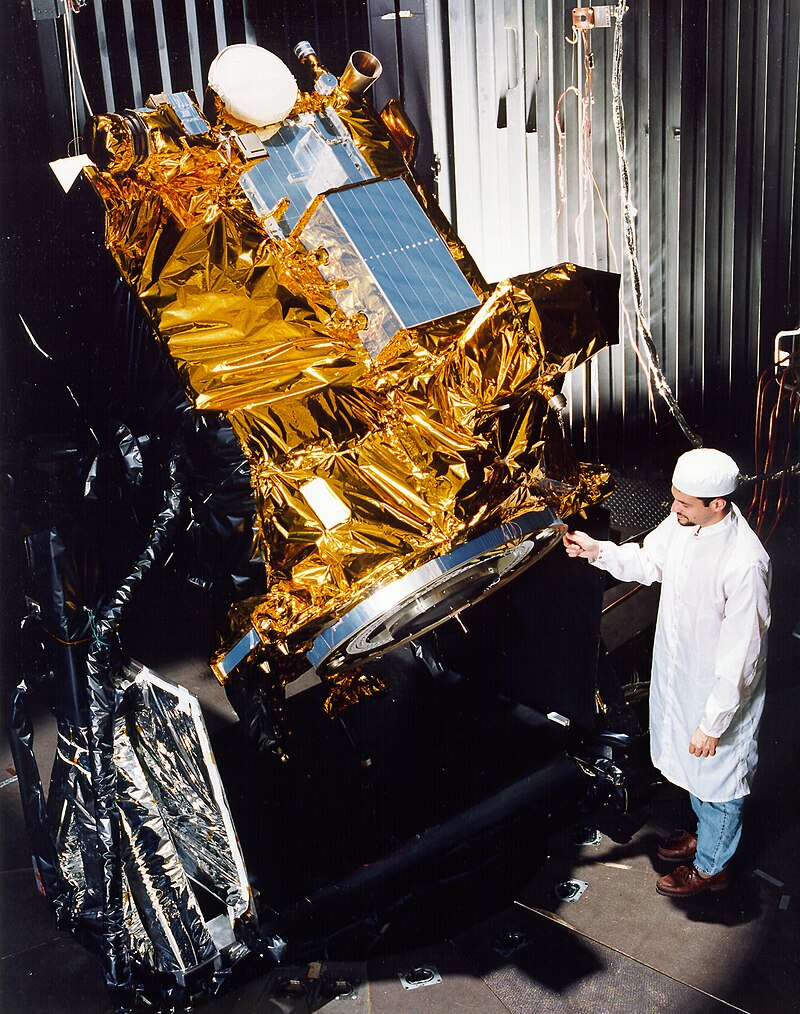
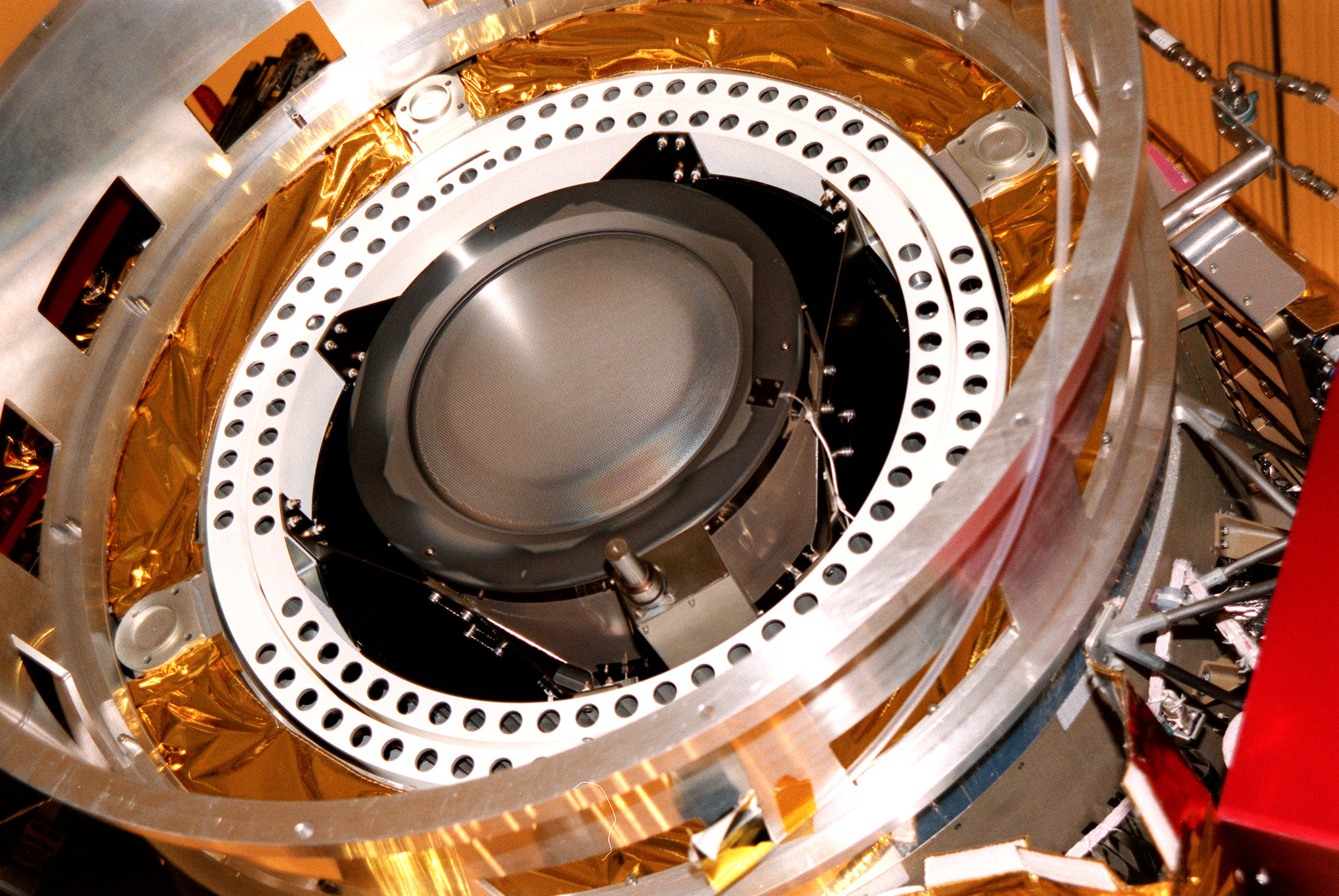
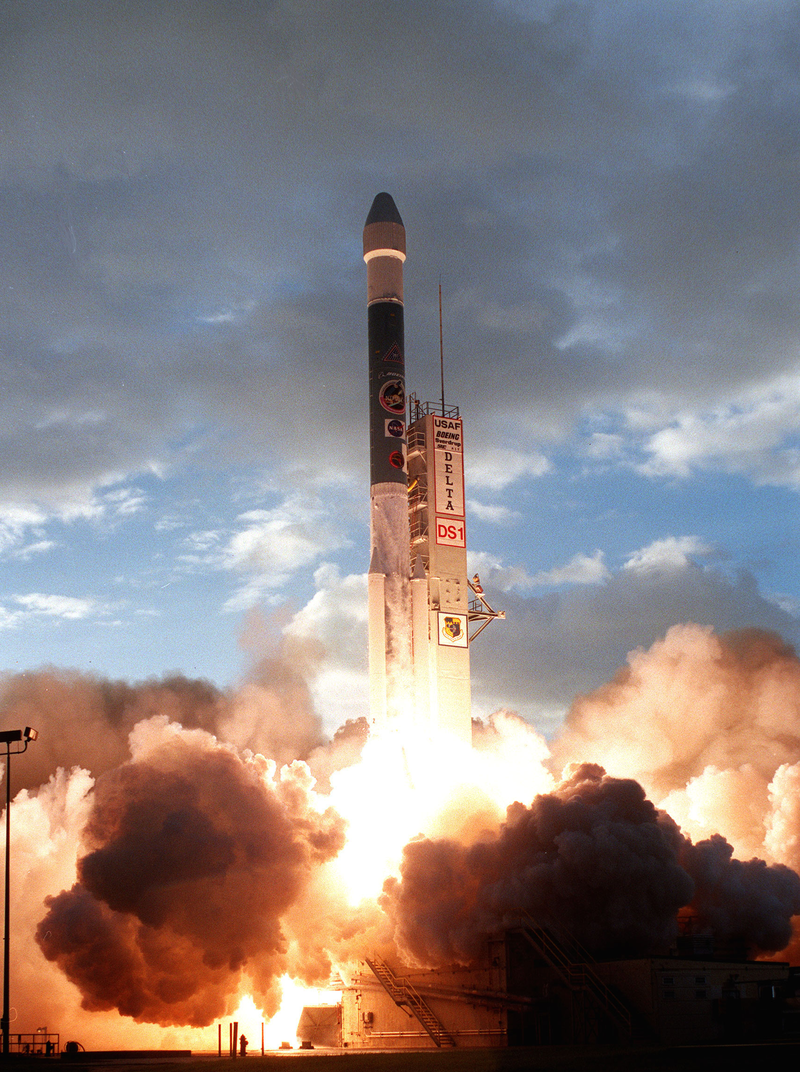
The fully assembled Deep Space 1 spacecraft prepared for launch View of the Deep Space 1 spacecraft’s ion propulsion engine Launch of Deep Space 1 on a Delta II rocket from Launch Pad 17A at Cape Canaveral Air Force Station, now Cape Canaveral Space Force Station, in Florida
Left: The fully assembled Deep Space 1 spacecraft prepared for launch. Middle: View of the Deep Space 1 spacecraft’s ion propulsion engine. Right: Launch of Deep Space 1 on a Delta II rocket from Launch Pad 17A at Cape Canaveral Air Force Station, now Cape Canaveral Space Force Station, in Florida.

The 12 technologies Deep Space 1 tested included the ion propulsion system; the autonomous navigation system; an autonomous control system; a beacon system that sends simple tones to Earth to advise controllers of spacecraft health; a solar array with concentrator lenses; an integrated camera and imaging spectrometer; an integrated ion and electron spectrometer; a small deep-space transponder; a Ka-band solid-state power amplifier; low-power electronics; a multifunctional structure testing new packaging technology; and a power activation and switching module. Scientists also gathered data on whether the ion engine’s plume interfered with any of the spacecraft’s instruments. The ion engine used xenon gas as its propellant and obtained power from the spacecraft’s high-efficiency solar arrays. Although providing low thrust overall, the engine achieved more thrust than any chemical engine.
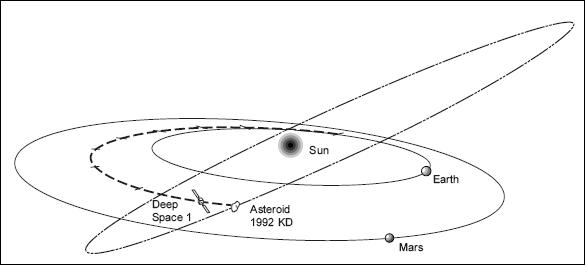
The Deep Space 1 spacecraft’s primary mission trajectory, including the flyby of asteroid 1992 KD, renamed 9969 Braille
The Deep Space 1 spacecraft’s primary mission trajectory, including the flyby of asteroid 1992 KD, renamed 9969 Braille.

The launch of Deep Space 1 took place atop a Delta II rocket on Oct. 24, 1998, from Launch Pad 17A at Cape Canaveral Air Force Station, now Cape Canaveral Space Force Station, in Florida. After entering an initial parking orbit around the Earth, the rocket’s third stage boosted Deep Space 1 into solar orbit. The initial mission plan included demonstration of the new technologies and a flyby of asteroid 1992 KD, renamed 9969 Braille shortly before the spacecraft’s encounter. On Nov. 10, ground controllers commanded the ion engine to commence firing but it only operated for 4.5 minutes. They tried again on Nov. 24 with the spacecraft 3 million miles from Earth, and this time the engine firing succeeded, running for the planned 14 days. Over the next six months, the spacecraft successfully tested all 12 of its technology demonstrations, completing the activity in June 1999.
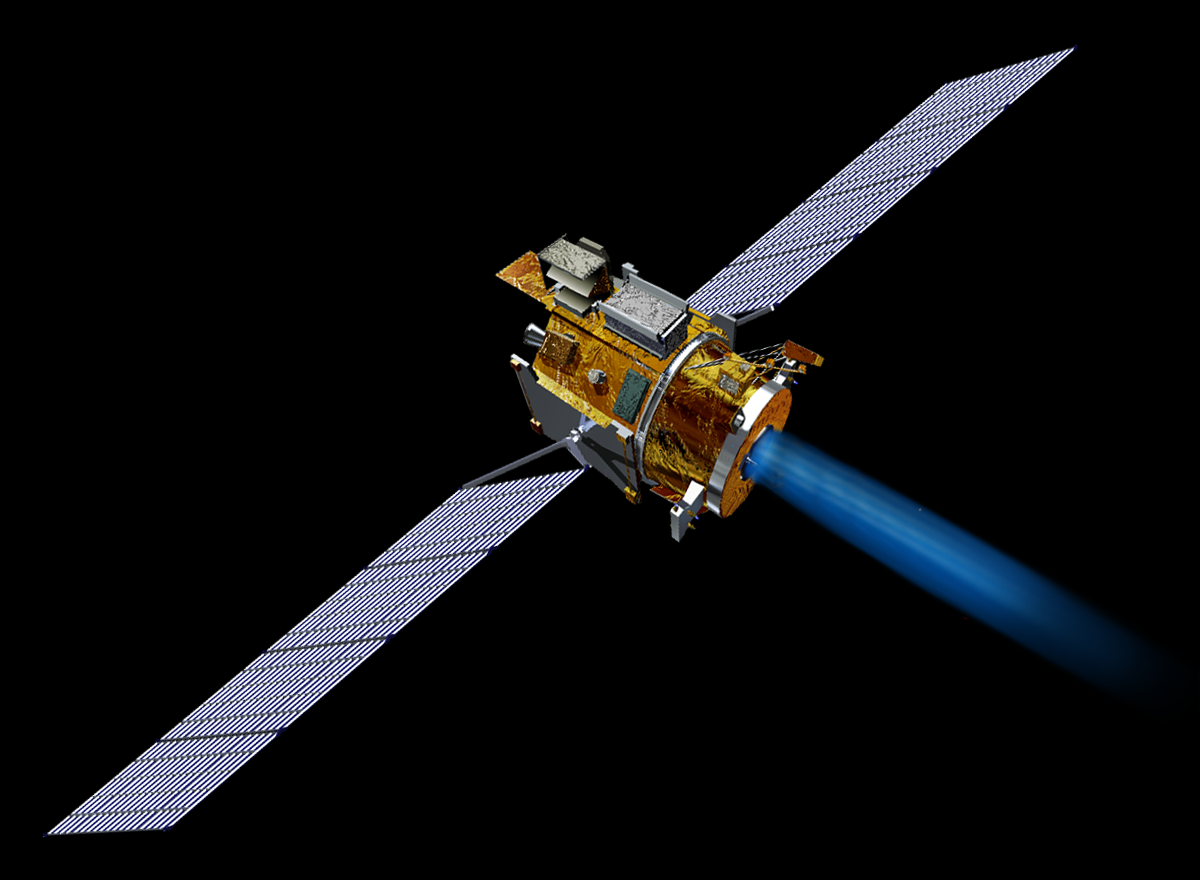

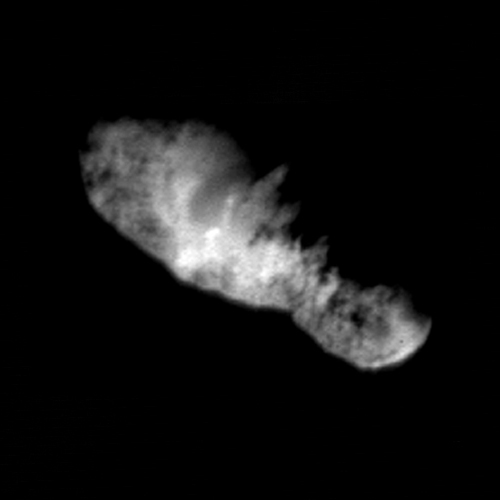
Illustration of Deep Space 1 and the blue exhaust of its ion propulsion engine Blurry image of asteroid 9969 Braille Image of comet 19P/Borrelly
Left: Illustration of Deep Space 1 and the blue exhaust of its ion propulsion engine. Middle: Blurry image of asteroid 9969 Braille. Right: Highest quality image of comet 19P/Borrelly.

Due to an onboard computer crash shortly before the encounter, as well as the inability of the autonomous navigation system to lock onto the darker than expected asteroid, Deep Space 1’s flyby of Braille on July 29, 1999, occurred at a distance of 16 miles instead of the planned 790 feet. Thus, the images the spacecraft returned did not show any detail, while other instruments provided good data. When the spacecraft’s primary mission ended on Sept. 18, 1999, mission managers approved an extended mission to target a flyby of comet 19P/Borrelly. The spacecraft’s star tracker failed on Nov. 11, 1999, putting the comet flyby in jeopardy. Over the next five months, ground controllers built a new attitude control system that did not rely on the star tracker, and the flyby could proceed. Deep Space 1 entered comet Borrelly’s coma on Sept. 22, 2001, and flew by its nucleus at a distance of 1,350 miles. The spacecraft provided the most detailed images of a comet’s nucleus up to that time. Having operated well beyond its expected lifetime and with its attitude control fuel running low, ground controllers turned off the spacecraft on Dec. 18, 2001. Its ion propulsion engine had operated for 16,265 hours, far longer than any previous spacecraft, and provided a total velocity change of three miles per second, the largest achieved by any spacecraft with its own propulsion system.
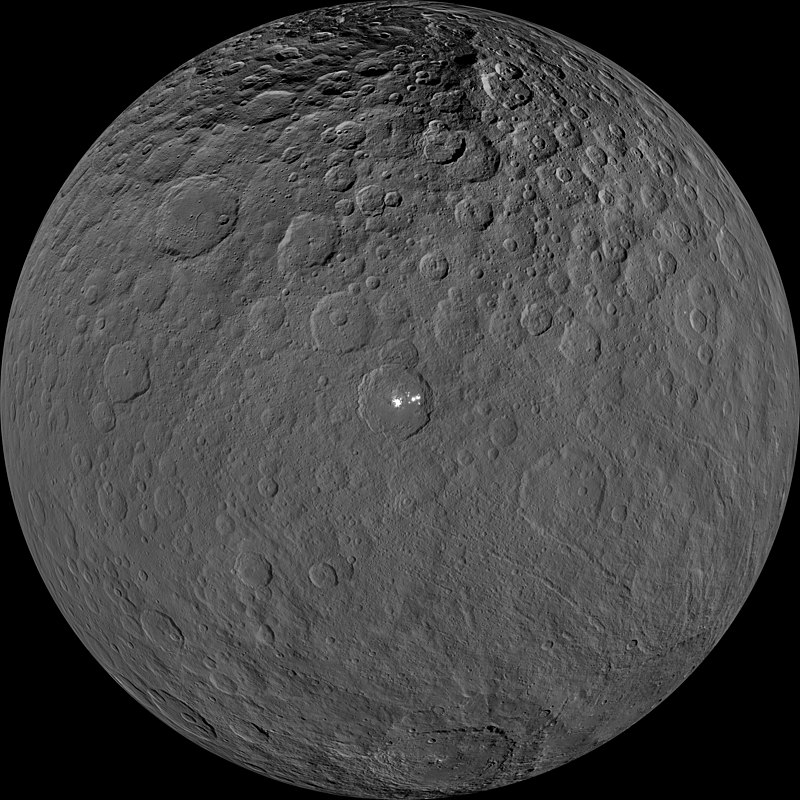
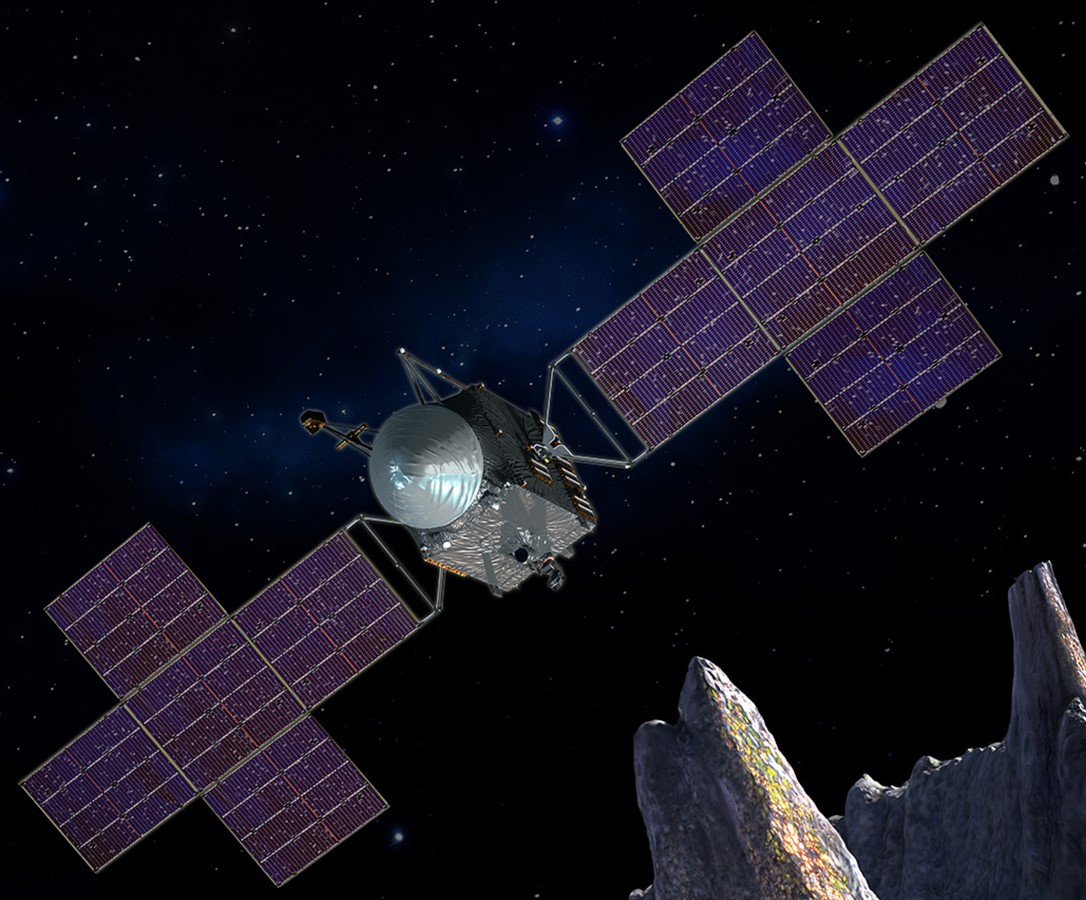
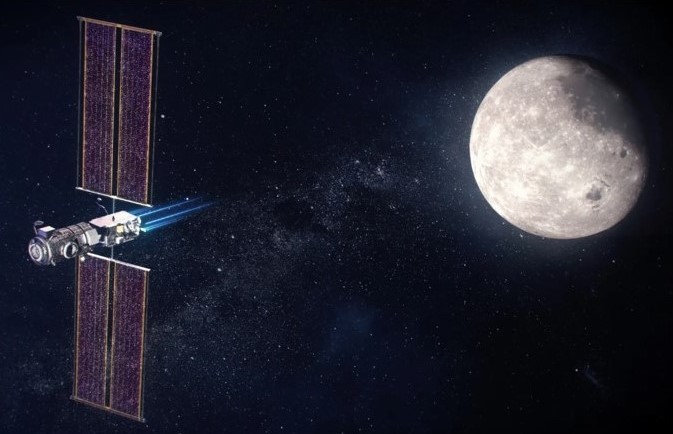
Dawn spacecraft image of dwarf planet Ceres Illustration of the Psyche spacecraft during its encounter with the asteroid of the same name Illustration of Gateway Habitation and Logistics Outpost and Power and Propulsion Element using ion propulsion
Left: Dawn spacecraft image of dwarf planet Ceres. Middle: Illustration of the Psyche spacecraft during its encounter with the asteroid of the same name. Right: Illustration of Gateway Habitation and Logistics Outpost and Power and Propulsion Element using ion propulsion.

The ion propulsion technology that Deep Space 1 demonstrated has found use in interplanetary uncrewed missions and will see use in future human lunar exploration. Launched in 2007, the Dawn spacecraft’s ion propulsion system enabled it to explore two worlds between 2011 and 2018, the protoplanet Vesta and the dwarf planet Ceres, entering orbit around each to conduct in-depth studies not otherwise possible. The Psyche spacecraft, currently on its way to explore the asteroid of the same name, also uses ion propulsion. In the arena of future human space exploration, the Gateway, part of NASA-led Artemis missions to return astronauts to the Moon, will establish a human presence in lunar orbit. The Gateway’s Power and Propulsion Element plans to use its Advanced Electric Propulsion System to arrive in lunar orbit and to maintain that orbit enabling regular astronaut visits.

>>> Read full article>>>
Copyright for syndicated content belongs to the linked Source : Nasa – https://www.nasa.gov/history/25-years-ago-launch-of-deep-space-1-technology-demonstration-spacecraft/


Tags: LaunchscienceYears
Previous Post

How NASA Is Protecting Europa Clipper From Space Radiation

Next Post

Sharks Have Very Low Mutation Rates, New Study Shows

Discover the Inspiring New Children’s Book Series Celebrating Muslim Trailblazers Worldwide

January 8, 2026

5 Dynamic Forces Fueling Today’s Economic and Market Boom

January 8, 2026

Primate Review: Wild Monkey Chaos Sparks a Heart-Pounding Horror Ride

January 8, 2026

New U.S. dietary guidelines: 6 biggest changes to know – NBC News

January 8, 2026

Can anyone stop Trump from seizing Greenland? – vox.com

January 8, 2026

Building Bonds Outdoors: How Backyard Community Clubs Spark Sport, Ecology, and Connection

January 8, 2026

Physicists Create a Perfect Conductor Using Ultracold Atoms

January 8, 2026

Reliving the Bone-Chilling Memories of Alaska’s Ultimate Cold Snap

January 8, 2026

Jimmie Johnson’s Daughters Take Center Stage in New Fashion and Lifestyle Campaign – The SportsRush

January 8, 2026

Delta CIO Rahul Samant to Retire After Leading Groundbreaking Technology Transformation

January 8, 2026

Categories

Archives

January 2026
M T W T F S S
 1234
567891011
12131415161718
19202122232425
262728293031  
« Dec    
Earth-News.info

The Earth News is an independent English-language daily published Website from all around the World News

Browse by Category

  • Business (20,132)
  • Ecology (1,011)
  • Economy (1,030)
  • Entertainment (21,906)
  • General (19,211)
  • Health (10,070)
  • Lifestyle (1,042)
  • News (22,149)
  • People (1,036)
  • Politics (1,044)
  • Science (16,245)
  • Sports (21,529)
  • Technology (16,012)
  • World (1,019)

Recent News

Discover the Inspiring New Children’s Book Series Celebrating Muslim Trailblazers Worldwide

January 8, 2026

5 Dynamic Forces Fueling Today’s Economic and Market Boom

January 8, 2026
  • About
  • Advertise
  • Privacy & Policy
  • Contact

© 2023 earth-news.info

No Result
View All Result

© 2023 earth-news.info

No Result
View All Result

© 2023 earth-news.info

Go to mobile version