





* . *
  • About
  • Advertise
  • Privacy & Policy
  • Contact
Friday, February 13, 2026
Earth-News
  • Home
  • Business
  • Entertainment

    Florida Man’s Unexpected Adventure in The Woods Turns Into an Unforgettable Mix-Up

    California Unveils New Mandated Reporter Rules Transforming the Entertainment Industry

    Wildlight Entertainment Faces Setback with Staff Layoffs Soon After Debut Game Launch

    Grammy Award-Winning Singer Ready to Ignite the Stage at Modesto’s Gallo Center – Discover Who and When!

    Watch the U.S. Air Force F-35A Lightning II Light Up the Sky at the Columbus Air Show!

    Black Voices Ignite the Spark at the 2026 Sundance Film Festival

  • General
  • Health
  • News

    Cracking the Code: Why China’s Economic Challenges Aren’t Shaking Markets, Unlike America’s” – Bloomberg

    Trump’s Narrow Window to Spread the Truth About Harris

    Trump’s Narrow Window to Spread the Truth About Harris

    Israel-Gaza war live updates: Hamas leader Ismail Haniyeh assassinated in Iran, group says

    Israel-Gaza war live updates: Hamas leader Ismail Haniyeh assassinated in Iran, group says

    PAP Boss to Niger Delta Youths, Stay Away from the Protest

    PAP Boss to Niger Delta Youths, Stay Away from the Protest

    Court Restricts Protests In Lagos To Freedom, Peace Park

    Court Restricts Protests In Lagos To Freedom, Peace Park

    Fans React to Jazz Jennings’ Inspiring Weight Loss Journey

    Fans React to Jazz Jennings’ Inspiring Weight Loss Journey

    Trending Tags

    • Trump Inauguration
    • United Stated
    • White House
    • Market Stories
    • Election Results
  • Science
  • Sports
  • Technology

    AITX Surges Nearly 45% to $0.0005: Keep an Eye on RAD Deployments for Recurring Revenue Growth

    NIST Fuels Quantum Technology Breakthroughs with $3.19M Investment in Next-Gen SBIR Projects

    Get Ready for the 2026 NHRA Chassis Certifications at World Wide Technology Raceway – March 14-15!

    John Deere Expands Precision Ag Technology Access – Morning Ag Clips

    Why AI Must Collaborate with Doctors to Create Trustworthy Healthcare Technology

    How Globalization and Technology Are Shaping the Future of Domestic Politics, According to Eswar Prasad

    Trending Tags

    • Nintendo Switch
    • CES 2017
    • Playstation 4 Pro
    • Mark Zuckerberg
No Result
View All Result
  • Home
  • Business
  • Entertainment

    Florida Man’s Unexpected Adventure in The Woods Turns Into an Unforgettable Mix-Up

    California Unveils New Mandated Reporter Rules Transforming the Entertainment Industry

    Wildlight Entertainment Faces Setback with Staff Layoffs Soon After Debut Game Launch

    Grammy Award-Winning Singer Ready to Ignite the Stage at Modesto’s Gallo Center – Discover Who and When!

    Watch the U.S. Air Force F-35A Lightning II Light Up the Sky at the Columbus Air Show!

    Black Voices Ignite the Spark at the 2026 Sundance Film Festival

  • General
  • Health
  • News

    Cracking the Code: Why China’s Economic Challenges Aren’t Shaking Markets, Unlike America’s” – Bloomberg

    Trump’s Narrow Window to Spread the Truth About Harris

    Trump’s Narrow Window to Spread the Truth About Harris

    Israel-Gaza war live updates: Hamas leader Ismail Haniyeh assassinated in Iran, group says

    Israel-Gaza war live updates: Hamas leader Ismail Haniyeh assassinated in Iran, group says

    PAP Boss to Niger Delta Youths, Stay Away from the Protest

    PAP Boss to Niger Delta Youths, Stay Away from the Protest

    Court Restricts Protests In Lagos To Freedom, Peace Park

    Court Restricts Protests In Lagos To Freedom, Peace Park

    Fans React to Jazz Jennings’ Inspiring Weight Loss Journey

    Fans React to Jazz Jennings’ Inspiring Weight Loss Journey

    Trending Tags

    • Trump Inauguration
    • United Stated
    • White House
    • Market Stories
    • Election Results
  • Science
  • Sports
  • Technology

    AITX Surges Nearly 45% to $0.0005: Keep an Eye on RAD Deployments for Recurring Revenue Growth

    NIST Fuels Quantum Technology Breakthroughs with $3.19M Investment in Next-Gen SBIR Projects

    Get Ready for the 2026 NHRA Chassis Certifications at World Wide Technology Raceway – March 14-15!

    John Deere Expands Precision Ag Technology Access – Morning Ag Clips

    Why AI Must Collaborate with Doctors to Create Trustworthy Healthcare Technology

    How Globalization and Technology Are Shaping the Future of Domestic Politics, According to Eswar Prasad

    Trending Tags

    • Nintendo Switch
    • CES 2017
    • Playstation 4 Pro
    • Mark Zuckerberg
No Result
View All Result
Earth-News
No Result
View All Result
Home Science

The sinister history of America’s ‘uranium gold rush’

July 13, 2024
in Science
The sinister history of America’s ‘uranium gold rush’
Share on FacebookShare on Twitter

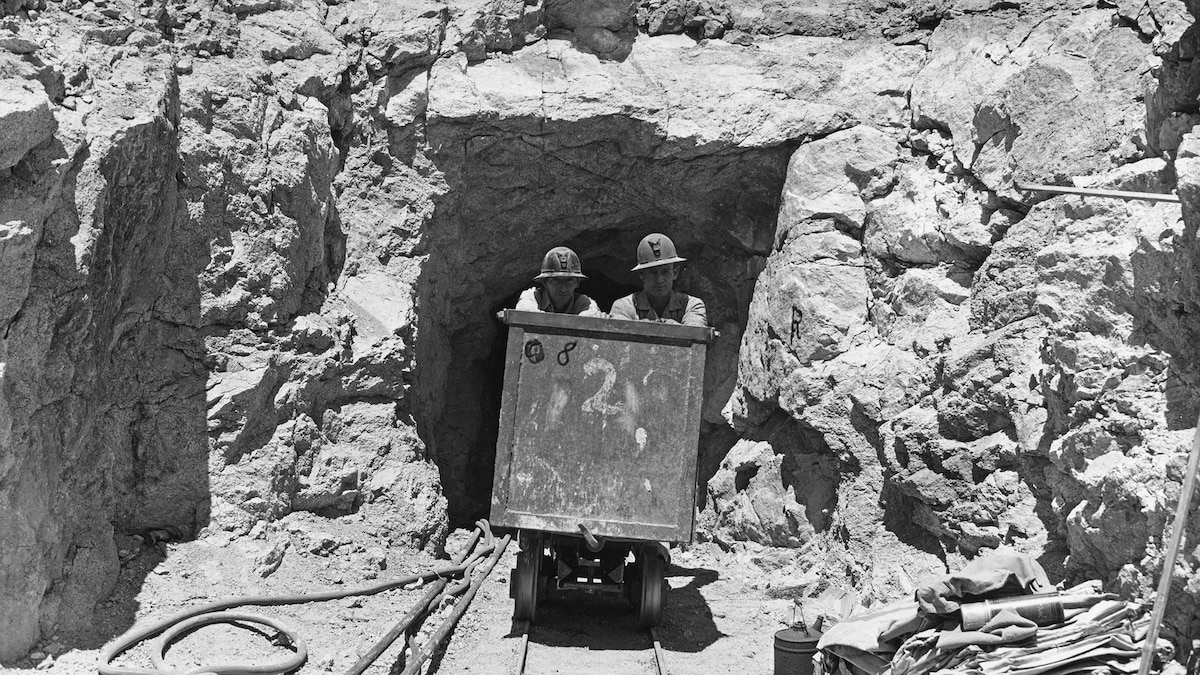
Armed with picks and shovels, the prospectors turned to the American West intent on finding deposits of the mineral that would make their fortunes. Their pursuit of wealth led to vast riches—and left ghost towns in its wake.

But the year wasn’t 1849, and the miners weren’t in search of gold. Instead, it was the 1950s, and they carried Geiger counters along with their shovels. They were part of the United States’ last big mineral rush—a forgotten race to find uranium deposits at the dawn of the nuclear age.

Uranium mining’s early days

Uranium hadn’t always been a hot commodity: When a prospector found a deposit of yellow rock in Montrose County, Colorado in 1881, radioactivity hadn’t even been discovered yet.

Though uranium mines  near the intersection of New Mexico, Colorado, Arizona, and Utah, now known as the Uravan Mineral Belt, were active in the early 20th century, but production was low and mining was mostly focused on radium and vanadium, elements also found in carnotite ore that is used in steel production.

A jagged, green rock specimen

Uranium ore from Daybreak Mine in Washington state. Once considered an cheap byproduct of mining radium and vanadium, uranium became highly sought after when scientists learned it could power nuclear weapons and create massive amounts of energy.

Photograph by Bjoern Wylezich, Getty Images

By the dawn of the Second World War, uranium was still considered to be what historian Bernard Conway calls a “worthless byproduct of vanadium refinement.”

But that changed with the Manhattan Project, the top-secret effort to develop the world’s first nuclear weapons. Project scientists attempted to invent both a uranium bomb and one based on plutonium, an element that, they discovered, could be produced in a reactor fueled by uranium.

A new atomic age

In early 1945, Manhattan Project scientists successfully detonated Trinity, the first plutonium bomb. A similar bomb would be detonated over Nagasaki, Japan less than a month later, just three days after an untested uranium-powered bomb was dropped on Hiroshima. The detonations ended the war and ushered in the nuclear age—and suddenly uranium and its derivatives were seen as not just a valuable commodity, but a matter of national security.

After the war, amidst a global debate on nuclear proliferation, the U.S. created the Atomic Energy Commission, a civilian-led agency tasked with overseeing all nuclear affairs. The Manhattan Project had purchased most of its uranium from the Belgian Congo. But the U.S. wanted to use home-mined uranium for its weapons—and keep its uranium out of the hands of the USSR amid growing Cold War tensions. To do so, the U.S. would need to monopolize its own uranium for its nuclear arsenal.

A black and white photo of a waitress poses with a 'Uranium-Burger' at a diner

A waitress poses with a ‘Uranium Burger’ at a diner in Salt Lake City, Utah in 1954. The sandwich was named after the region’s booming uranium industry.

Photograph by Carl Iwasaki, Getty Images

Though the federal government could have owned and operated all U.S.-based uranium mining, the AEC instead opted to pay civilians to discover and mine the uranium. The agency touted American ingenuity, claiming it needed civilian mining know-how to procure home-mined uranium and discover new deposits.

But in reality, writes historian Nate Housley, the decision to sponsor a free-enterprise uranium program was based on officials’ suspicion of organized labor and a desire to thrust oversight of the uranium industry onto the states. And so, when the AEC announced in 1948 that it would pay guaranteed minimum prices and discovery bonuses for uranium ore, the federal government became the uranium industry’s sole customer—and a race to discover and mine as much uranium as possible began.

The boom begins

The U.S. was rich in uranium deposits, and uranium mines sprang up throughout the Southwest.

In 1952, geologist Charlie Steen discovered a gigantic uranium deposit in Utah, the first major find of the program. He became an instant multi-millionaire. The Navajo Nation, which owned much of the land on which uranium ore was found, also took part in the boom.

Soon, prospectors from all over the nation headed west. The government even published a do-it-yourself guidebook that offered a crash course in radioactive elements, uranium prospecting, and how to cash in, ensuring readers that the pursuit was not dangerous in any way. Between 1949 and 1962 alone, the U.S. purchased over 3.6 million tons of uranium ore, making fortunes and encouraging an ever-growing industry.

A rusty, abandoned, ore bin on the side of a reddish, dessert rocky mountain side Steen Canyon near La Sal, Utah

An ore bin abandoned at the Mi Vida Mine in Steen Canyon near La Sal, Utah. The mine was near the site of the first big uranium find in the U.S. Facing calls for nuclear disarmament, U.S. government demand for the mineral diminished and the booming industry abruptly ended.

Photograph by VW Pics, Getty Images

A radioactive legacy

But the boom had a sinister side. The health implications of working with radioactive substances were little known, and the industry was virtually unregulated in many areas. Navajo workers were particularly affected, with more than 1,000 mines dug on Navajo reservation land. Many workers were poorly paid and went to work with no protective gear of any kind.

Inside the mines, they faced dangerously high levels of radon, and at home, the dust contained on their clothing and shoes meant that their family members were exposed to radioactive materials, too.

Yet public health studies initially examined white miners, note historians Doug Brugge and Rob Goble, and despite a growing awareness that working in the uranium mines was associated with high lung cancer rates and other health problems, the AEC suppressed research and insisted states regulate uranium mining, despite nearly a century of federal involvement in mine safety in other mining industries. Only in 1967 did the federal government set its first enforceable radon regulations.

By then, the boom was headed toward a bust. International pressure for nuclear disarmament was on the rise, and in 1964 the government monopoly on uranium purchasing ended. The U.S. also faced a looming energy crisis, changing the nation’s nuclear priorities. In 1974, the AEC was disbanded with the passage of the Energy Reorganization Act.

The uranium industry has had its ups and downs since then, most notably when uranium prices tanked in the wake of the Chernobyl disaster in 1986.

But the boom days at the industry’s dawn still echo today—in the bodies of the workers whose mining cost them their health, in the fallout of nuclear contamination of groundwater and soil, and in the form of hundreds of abandoned mines, many of them Superfund sites, scattered throughout the Southwest.

>>> Read full article>>>
Copyright for syndicated content belongs to the linked Source : National Geographic – https://www.nationalgeographic.com/history/article/forgotten-american-nuclear-age-uranium-rush


Tags: “Sinisterhistory’science
Previous Post

The best body pillows for every type of sleeper

Next Post

These microbes break you down when you die. Are they a key to forensic science?

Ancient Trees Face Growing Threat as Climate Change Accelerates Their Decline

February 13, 2026

Bernie Sanders balks at Trump’s ‘delusional’ claim about the economy: ‘God help us’ – MS NOW

February 13, 2026

Florida Man’s Unexpected Adventure in The Woods Turns Into an Unforgettable Mix-Up

February 13, 2026

Iowa House Subcommittee Sparks Heated Debate Over Bill to Ban Vaccine Mandates in Health Crises

February 13, 2026

Election Year Spotlight: Politics and Mining Dominate the Conversation

February 13, 2026

Rising Road Salt Pollution Threatens Northwest Ohio Waterways, Sparking Ecological and Health Concerns

February 13, 2026

Elephants Are Brilliant-and Their Whiskers Play a Surprising Role Too

February 13, 2026

Associate Professor of Political Science Receives Prestigious Harry Frank Guggenheim Distinguished Scholar Award

February 13, 2026

Grab Your Favorite PS5 Games Now at 75% Off Before They’re Gone Forever!

February 13, 2026

Flick criticises VAR “mess” as Spain’s referee body admits technology “failure” in Barça loss – Yahoo Sports Canada

February 13, 2026

Categories

Archives

February 2026
M T W T F S S
 1
2345678
9101112131415
16171819202122
232425262728  
« Jan    
Earth-News.info

The Earth News is an independent English-language daily published Website from all around the World News

Browse by Category

  • Business (20,132)
  • Ecology (1,071)
  • Economy (1,088)
  • Entertainment (21,965)
  • General (19,877)
  • Health (10,129)
  • Lifestyle (1,103)
  • News (22,149)
  • People (1,097)
  • Politics (1,105)
  • Science (16,304)
  • Sports (21,590)
  • Technology (16,070)
  • World (1,079)

Recent News

Ancient Trees Face Growing Threat as Climate Change Accelerates Their Decline

February 13, 2026

Bernie Sanders balks at Trump’s ‘delusional’ claim about the economy: ‘God help us’ – MS NOW

February 13, 2026
  • About
  • Advertise
  • Privacy & Policy
  • Contact

© 2023 earth-news.info

No Result
View All Result

© 2023 earth-news.info

No Result
View All Result

© 2023 earth-news.info

Go to mobile version
