







In the wake of the pandemic, there was a widespread feeling of urgency, a question of, how could we do better next time?
The World Health Organization sought to use that moment to come up with a plan for more unified global action – not just for responding to future pandemics, but for preventing and preparing for them as well.
Why We Wrote This
Talks convened by the World Health Organization seek to address issues of pandemic prevention and response, from transparency and global equity to misinformation. But consensus is difficult to reach.
Now, negotiators are in the final months of a two-year process to come up with a new pandemic agreement to do just that.
The agreement would address three main governance gaps: spillovers of diseases between humans and other species; a lack of a cohesive global framework for sharing information on pathogens, including for vaccine development; and equity issues such as uneven distribution of vaccines.
Participation is high, but so is tension.
There is a divide between the Global North and the Global South. Developed countries are focused mainly on preventing outbreaks from coming in over their borders. Developing countries seek greater health equity after feeling left behind during the last pandemic.
And in the U.S. Congress, Republicans worry the agreement would strengthen the WHO’s hand at the expense of U.S. interests – including free speech and freedom of religion – and greater accountability for China.
In the wake of the pandemic, there was a widespread feeling of urgency, a question of, how could we do better next time?
The World Health Organization sought to use that moment to come up with a plan for more unified global action – not just for responding to future pandemics, but for preventing and preparing for them as well.
Now, negotiators are in the final months of a two-year process to come up with a new pandemic treaty or agreement to do just that.
Why We Wrote This
Talks convened by the World Health Organization seek to address issues of pandemic prevention and response, from transparency and global equity to misinformation. But consensus is difficult to reach.
“We must seize the opportunities to improve global preparedness and response and to work together to find solutions,” says a spokesperson from the Department of Health and Human Services, which together with the State Department is leading U.S. involvement in the talks. “Infectious diseases do not respect national borders.”
Safeguarding the United States means expanding global as well as domestic capabilities, the Biden administration says. But as representatives from around the world meet in Geneva this week for the eighth round of negotiations, they face an uphill climb ahead of a late May deadline.
There is a divide between the Global North and the Global South. Developed countries are focused mainly on preventing outbreaks from coming in over their borders. Developing countries seek greater health equity after feeling left behind during the last pandemic. A parallel effort to strengthen the legally binding International Health Regulations, last revised nearly 20 years ago, has muddied the waters – with some countries trying to shoehorn their priorities into the amended regulations, in case the agreement fails to pass.
Meanwhile in the U.S., congressional Republicans and their allies are pushing back against the Biden administration’s involvement in the talks. They say the process reflects little attempt to review or learn from the WHO’s track record during the pandemic. They also argue that the proposed agreement would strengthen the WHO’s hand at the expense of U.S. interests – including free speech and freedom of religion.
“We must ensure that the final draft does not violate our national sovereignty or infringe upon the rights of the American people,” said Ohio Rep. Brad Wenstrup, a doctor and chair of a special subcommittee investigating the COVID-19 pandemic, at a Feb. 5 House GOP press conference.
The event was convened by Rep. Chris Smith of New Jersey, who chairs the House Foreign Affairs subcommittee on global health. He said there has been “far too little scrutiny” of the legally binding agreement and its impact on U.S. health policy.
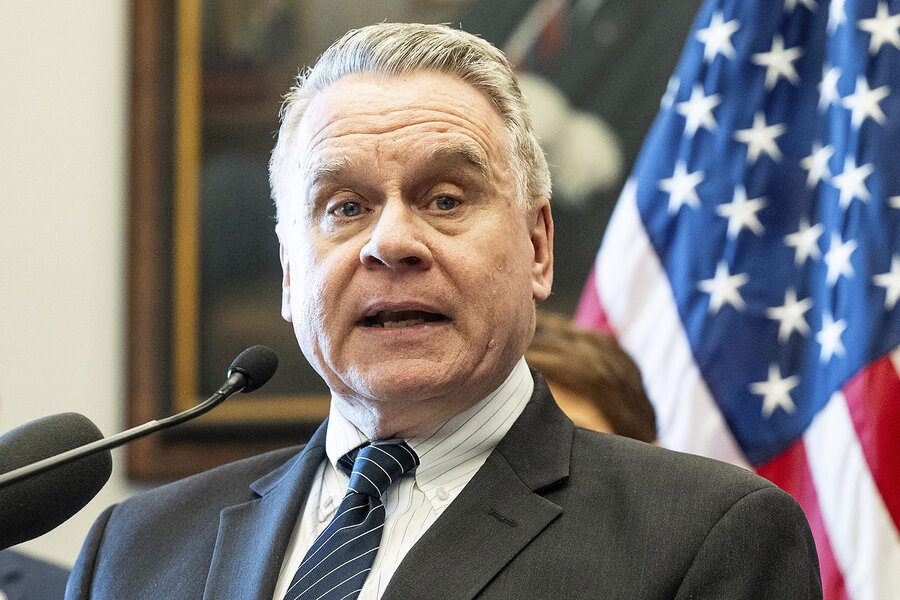
Michael Brochstein/Sipa USA/AP
Republican Rep. Chris Smith of New Jersey speaks at a press conference about the World Health Organization’s “pandemic treaty,” at the Capitol in Washington, Feb. 5, 2024. He says there has been far too little scrutiny of the legally binding agreement and its impact on U.S. health policy.
A treaty by any other name?
The agreement is essentially a treaty but is not so named – and would therefore not have to clear the hurdle of Senate ratification by two-thirds vote.
“If you look at the text, it looks like a treaty; it tastes like a treaty; it smells like a treaty. But negotiators have avoided using the term ‘treaty,’ in particular not to raise political problems in the U.S. Congress,” says Gian Luca Burci, the former legal counsel for the WHO and now a visiting professor of international law at the Graduate Institute in Geneva. But what matters, he adds, is not the label but the content.
The agreement would address three main governance gaps: spillovers of diseases between humans and other species; a lack of a cohesive global framework for sharing information on pathogens, including for vaccine development; and equity issues such as uneven distribution of vaccines. Some experts say an agreement that addresses those three gaps, even if modestly, would be a significant step of progress.
The most recent public draft, from late October, lays out a framework of principles but does not get into detailed proposals for implementation. With so little time left in the negotiations before a planned vote in late May, the details will likely either be unveiled at the 11th hour or worked out after the fact, including in annual follow-up meetings. There would also be a process for passing amendments, which would require support from at least two-thirds of signatories. Amendments would only come into force for nations that accepted them.
“The idea that this somehow is going to deeply impinge on American sovereignty implies that it’s going to be a really intense maximalist kind of international agreement – and it’s not heading in that direction right now,” says Ian Johnstone, a professor of international law at the Fletcher School of Law and Diplomacy at Tufts University and a United Nations consultant. But he adds that treaties generally involve giving up “a little bit of sovereignty” for the sake of a broader public policy goal.
Concerns about free speech, Chinese influence
Republicans and their allies are concerned about where a framework agreement could head, however, citing the WHO’s bending to political pressure from China, whose Communist Party espouses a different model of global governance.
Former Ambassador Andrew Bremberg, the U.S. representative to the WHO during the pandemic, said at the Feb. 5 event that not one of the proposed agreement’s provisions under consideration would deal with the No. 1 issue: China’s lack of transparency and accountability. In 2020, earlier epidemiological data could have helped the U.S. and other countries understand the nature and scope of the outbreak sooner – and thereby respond more effectively.
Another key concern is Article 18, which calls for combating misinformation through international collaboration. Critics say that could exacerbate the suppression of dissenting viewpoints, which conservatives see as systematized censorship.
Some on the right are also worried that such an agreement could give global backing to controversial policies, such as the Biden administration’s vaccine mandates. Professor Burci says the International Health Regulations are trying to facilitate mutual recognition of vaccine certificates but not to require vaccination, which remains a decision for each government.
“We will not sign on to an accord that in any way undermines our national sovereignty, our health security, or the ability of Americans to make decisions about their own health care,” says a senior Biden administration official, describing the primary U.S. goal in these negotiations as protecting Americans from future pandemics.
When the U.S. agreed to the International Health Regulations, it formally reserved the right to assume those obligations in accord with its “fundamental principles of federalism.” However, the pandemic agreement would not allow any such reservations, at least according to the latest public draft. The next two-week round of negotiations is scheduled to begin March 18.
>>> Read full article>>>
Copyright for syndicated content belongs to the linked Source : The Christian Science Monitor – https://www.csmonitor.com/USA/Politics/2024/0228/Treaty-on-pandemics-Why-nations-seek-it.-Why-it-s-so-hard?icid=rss



