






In 1817, British surgeon James Parkinson penned a case study of a malady he called “the shaking palsy”—a progressive affliction that left older adults with tremors, weakness, and the inability to control their body. Stumped by the disorder’s cause, the physician closed his paper with a plea to his fellow scientists to follow up on his work.
More than two centuries later, the condition now known as Parkinson’s disease is the second most common neurological disorder of its kind. But though it affects up to a million Americans and is projected to balloon even further in the coming years, the cure Parkinson once imagined remains nearly as elusive as it was in the 19th century.
“We don’t know what causes it. We don’t know why it progresses. We certainly don’t know how to stop it. And we have a hard time measuring it,” says James Beck, chief scientific officer of the Parkinson’s Foundation.
What do we know about Parkinson’s disease—and is there hope of a cure? Here’s why we might be entering the golden years of Parkinson’s research.

This MRI scan reveals the nerve fibers—colored in red, green, and blue—in the region of the brain involved in smooth muscle control. In Parkinson’s disease, the destruction of these neurons reduces the amount of dopamine in this brain region, resulting in tremors, jerky movements, and a lack of coordination.
Image by Mark and Mary Stevens Neuroimaging and Informatics Institute/Science Photo Library

This micrograph of a section of a brain affected by Parkinson’s disease shows the nuclei of nerve cells (blue) and the protein alpha-synuclein (red). It is thought that the accumulation of this protein leads to the formation of Lewy bodies and the progressive degeneration of neurons, which causes the symptoms of Parkinson’s disease.
Micrograph by Mya C. Schiess, Roger Bick, UT Medical School/Science Photo Library
What is Parkinson’s disease?
Parkinson’s disease is a progressive neurological disorder most commonly diagnosed in adults age 60 and over. But though it is often misperceived as a disease that only affects older adults, its onset can occur years before diagnosis—and the condition worsens over time.
Though it can vary for each patient, the early phase of Parkinson’s disease is mild and often goes undetected. During this phase, neurons in the basal ganglia—structures near the center of the brain—start to malfunction or die. These nerve cells usually produce dopamine, a neurotransmitter that affects movement and memory.
(What are the signs of dementia—and why is it so hard to diagnose?)
As the neurons start to die off, other neurotransmitters that control bodily functions like digestion and blood pressure can also be affected. By the time this produces physical symptoms, up to 80 percent of the dopamine transmitters in the basal ganglia may already be dead.
“Diagnosis is really tricky,” says Beck, who notes that there is no definitive blood or brain test for the disease. Instead, neurologists diagnose it based on motor symptoms such as bradykinesia (slow movements) and tremor. Since so many patients are 60 and over, Beck says that doctors can overlook the condition in younger adults.
Over time, Parkinson’s disease patients may experience physical symptoms like restless leg syndrome, constipation, drooling, a loss of the sense of smell, and a less expressive, “mask-like” face. As the condition progresses, motor symptoms like tremor, stiffness, slowness, and instability can develop. Patients may also develop mental health symptoms, digestive issues, sleep disorders, dementia, and cognitive impairment.
Though Parkinson’s disease isn’t fatal, it does raise one’s risk of dying from associated factors like falls, and patients with complications like dementia and sleep disorders are also at greater risk.
What causes Parkinson’s disease—and who’s at risk?
Scientists know that neuron loss plays a role in Parkinson’s disease and research has also linked mutations in certain genes to the disease.
But its definitive causes remain unclear. Up to 90 percent of patients have no known genetic predisposition to Parkinson’s disease. Studies show that men are at slightly higher risk than women, but according to the National Institutes of Health, “virtually anyone could be at risk for developing Parkinson’s.” Ethnicity may play a role: Recent research shows that Ashkenazi Jews and North African Berbers are much likelier to carry genetic mutations associated with the disease, though a minority actually go on to develop Parkinson’s disease.
(This woman can smell Parkinson’s disease—and scientists are studying it.)
“If you have a family member who has Parkinson’s, you probably worry about getting it yourself,” says Beck. “You’re definitely at a higher risk—your risk doubles.” But not every person at risk goes on to develop the disease, he notes, and research into the exact mechanisms that provoke Parkinson’s is ongoing.
So are inquiries into just how many people have the disease. Because late diagnoses and misdiagnoses are common, it’s tricky to estimate its prevalence. But recent research funded by the Parkinson’s Foundation and others suggests that about a million people currently live with the disease in the U.S. alone.
That’s twice the prevalence four decades ago, and researchers predict the number will rise to over 1.2 million by 2030, largely due to an increasingly elderly population. According to the World Health Organization, about 8.5 million people currently have been diagnosed with the disease worldwide.
How is Parkinson’s disease treated?
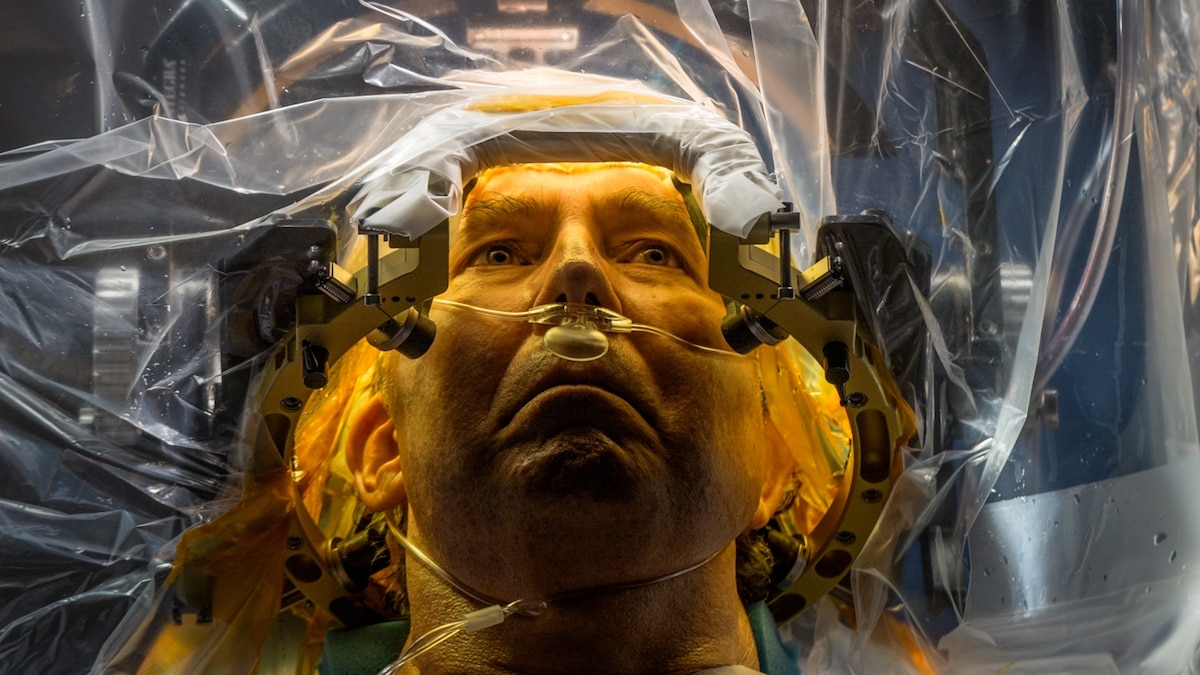
Since Parkinson’s disease symptoms vary from person to person and there is no cure, treatment options vary as well. Levodopa is the most commonly used medication in Parkinson’s patients, and is used to manage some of the disease’s best-known motor symptoms. Other treatments include physical, occupational, and speech therapies and deep brain stimulation, a surgery that stimulates the affected portion of the brain to treat tremor and some other symptoms.
But an ongoing neurologist shortage and worldwide diagnosis and treatment disparities mean not everyone has the same access to Parkinson’s disease treatment. “Despite the significant impact of PD,” wrote a World Health Organization expert panel in 2022, “there is global inequality in the availability of neurological resources to manage the disease, especially in low- and middle-income countries.”
(This crippling disease often goes under-diagnosed—unless you’re white.)
Such disparities are also common in the U.S. Though people in lower income brackets are less likely to develop Parkinson’s disease than their richer counterparts, research shows that members of racial and ethnic minority groups in the U.S. are diagnosed later and can have trouble accessing treatments like Levodopa, the most commonly used medication in Parkinson’s patients.
What are we learning about Parkinson’s disease?
But despite these vexing gaps in knowledge and access, the fight against Parkinson’s disease continues. Clinical trials and wide-scale studies are ongoing, and each new year means new advances in diagnoses, genetics, and treatments to improve the quality of life of Parkinson’s patients.
And that research is entering its golden years, most notably with the 2023 discovery of the first known biomarker of the disease, abnormal alpha-synuclein protein. When the protein mutates and “misfolds,” it appears to damage neurons and lead to Parkinson’s symptoms. Yet questions remain about just how the so-called “Parkinson’s protein” works in the body.
Ongoing research is tackling everything from whether the disease can be detected by smell to a July 2024 study plumbing its potential links with anxiety in older adults. Another 2024 study found that Parkinson’s disease patients taking lixisenatide, an injectable medication used to treat diabetes, experienced less progression of motor symptoms than people with Parkinson’s disease who took a placebo. The drug works by stimulating insulin production in response to rising blood sugar.
Advocacy continues too. The disease has received unprecedented publicity in recent years, with diagnoses of figures like Michael J. Fox, Muhammad Ali, Linda Ronstadt, and others. In 2022 alone, the National Institute of Neurological Disorders and Stroke funded $259 million in Parkinson’s research—a figure supplemented by funds raised by advocacy organizations and patient groups worldwide.
Parkinson’s disease may still be as vexing as it was in James Parkinson’s day, but thanks to ongoing research and awareness, its days may be numbered.
“We’re not there yet,” says Beck. “But progress is being made.”
>>> Read full article>>>
Copyright for syndicated content belongs to the linked Source : National Geographic – https://www.nationalgeographic.com/science/article/parkinsons-disease-cause-symptoms-diagnosis



