







On August 20, 1977, the most ambitious space mission took off from Earth. The main goal of Voyager 2 was to study the outer Solar System up close. It became possible because of a rare alignment of planets. Voyager 2 was supposed to study all the gas giants of the Solar System: Jupiter, Saturn, Uranus, and Neptune. Astronomers also hoped it would be able to find and explore the edge of the Solar System.
Since Voyager 2 was built for interstellar travel, the probe was equipped with a large, 12-ft-wide antenna. It allowed the spaceship to send the data it gathered back to Earth. During its journey, the space probe discovered a 14th moon of Jupiter. Voyager 2 was the only spaceship to study all four giant planets from up close. It was the first human-made object to fly past Uranus, where it found two new rings and ten new moons.
Voyager 2 also flew by Neptune and noticed its “Great Dark Spot.” That’s a colossal spinning storm in the planet’s Southern Hemisphere. The storm is the size of Earth and moves at a speed of 1,500 miles per hour! These winds are the strongest ever recorded on any planet of the Solar System.
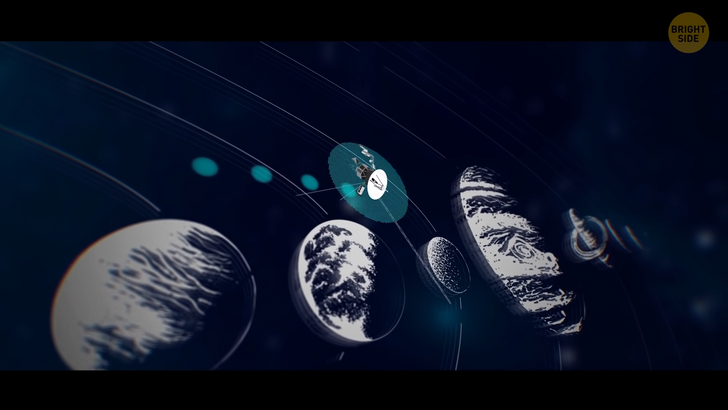
In the history of space exploration, only five spacecraft have managed to leave the gravitational pull of the Solar System. Those were Pioneer 10 and 11, Voyager 1 and 2, and New Horizons. People launch thousands of objects into space. These objects easily overcome Earth’s gravity. But the Sun is around 300,000 times as massive as our home planet. That’s why its gravitational pull is way more difficult to fight.
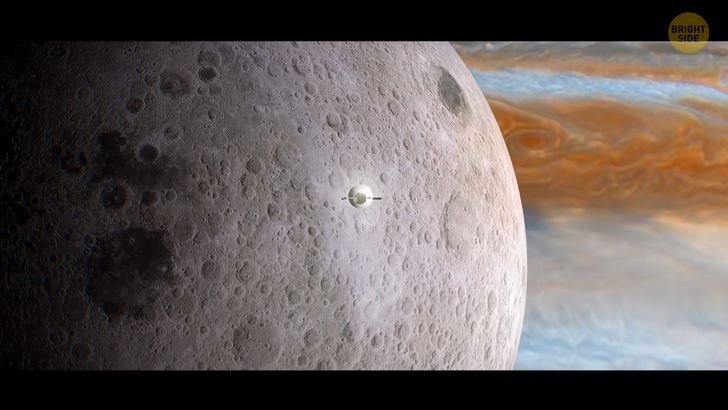
Even more impressively, Voyager 2 is the second human-made object in history to reach the space between stars after passing through the heliosphere. That’s a bubble of magnetic fields and particles produced by the Sun and protecting the Solar System. Two years after its launch, Voyager 2 started transmitting the first images of Jupiter. The space probe provided scientists with much-needed information about Io and Europa — some of the largest Jupiter’s moons. Then the space mission passed by the gas giant itself.
The distance between the spacecraft and the planet was around 400,000 miles. That’s when the probe noticed some changes in the shape and color of the Great Red Spot. It’s an enormous long-lived storm system — like a hurricane on Earth but much, much larger. [400,000 mi (644,000 km)]
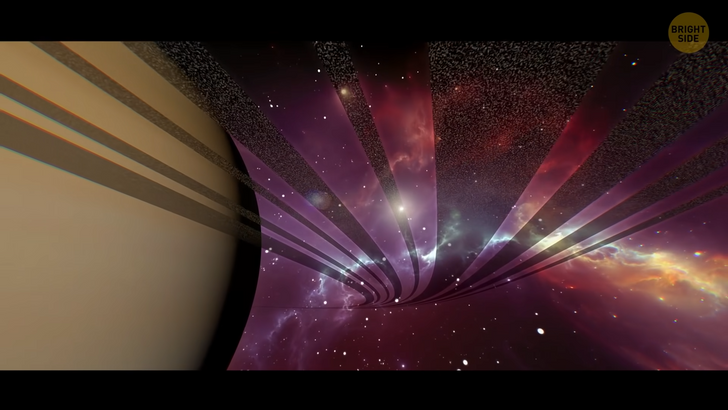
Two years later, Voyager 2 reached Saturn. It discovered “spokes” and kinks in some of the planet’s rings. While the spacecraft was flying behind and up past the gas giant, it passed through the plane of Saturn’s rings. At that time, Voyager’s speed was around 8 miles per second. For several minutes, the probe was hit by thousands of micron-sized grains of dust. This kept shifting the probe’s direction, and its control jets had to fire many times to stabilize the vehicle.
After Voyager 2 explored Uranus and Neptune, it headed out of the Solar System. Its instruments were put in low power to save energy. In August 2007, the spacecraft passed the termination shock. It’s the boundary marking the outer limit of the Sun’s influence. Here, the solar wind slows down.
In the summer of 2013, the probe reached interstellar space. Now, when it comes to sending and receiving signals in space, there are three factors you should keep in mind: distance, power, and time. The farther away a spacecraft is, the farther a signal has to travel before it reaches it. And the longer it takes for this signal to catch up with the spacecraft. And when it finally gets there, it’s extremely weak.
Another problem is that once the spacecraft is launched, it can’t be upgraded. It’s literally stuck with the technology it was outfitted with. Plus, such spaceships as Voyager 2, are powered by radioactive fuel. When special material radioactively decays, it releases heat that gets converted into electricity. Unfortunately, the more material decays away, the less power the spacecraft has for receiving and transmitting radio signals.
Despite this issue, we haven’t lost the connection with Voyager 1 and 2. That’s because new and more powerful technologies appear on Earth. Signals people send can reach much farther than before. That’s why it was possible to stay in touch with Voyager 2 — which entered interstellar space in 2018 and has already traveled almost 12 billion miles away from Earth. [12 billion mi (19.3 billion km)] But in March 2020, the main piece of equipment that allowed scientists to exchange signals with the spaceship was switched off.
After the communication with the spacecraft stopped, NASA spent around 11 months upgrading its Deep Space Network and installing new hardware. The DSN is an international array of huge radio antennas that help astronomers on Earth communicate with interplanetary missions. These antennas are located in California, Madrid, and Canberra. The one used to keep in touch with Voyager 2 is a 230-ft-wide dish in Canberra. This is the only equipment that can send commands that can reach the probe.
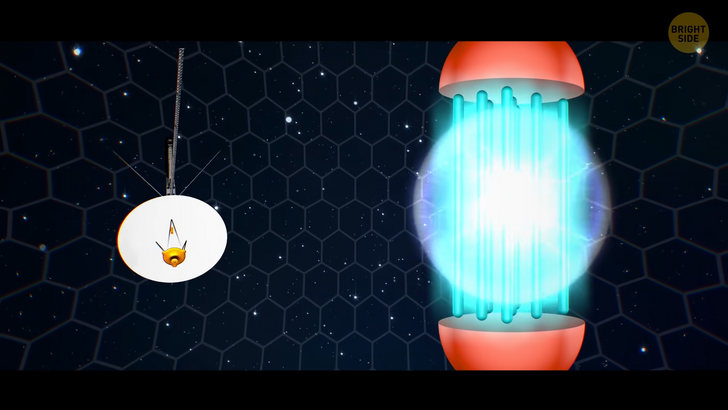
This antenna (known as DSS43) started operating in 1972 — five years before Voyager 2 and Voyager 1 were launched. At that time, it was only 210 feet across. Since then, the dish has received a lot of repairs and upgrades. But these 11 months were the longest the antenna was offline. In October 2020, the antenna was finally ready for a trial after all the upgrades and repairs. The mission operators sent a set of commands to Voyager 2.
And after many months of radio silence, the spacecraft returned the signal! The probe confirmed it had “heard” the call. After that, the spacecraft carried out the commands. While the dish was offline, the mission operators could actually receive science data and health updates from Voyager 2. Astronomers kept getting data from interstellar space — the region outside the Sun’s heliosphere. But they couldn’t send any commands to the probe since it had traveled too far away from Earth.
The upgraded antenna received two new radio transmitters. And it was done just in time! One of the transmitters — that was used to communicate with Voyager 2 — hadn’t been replaced in almost 50 years! The antenna also got new cooling and heating equipment and other electronics necessary to support the advanced transmitters.

A curious thing about the Deep Space Network is that its radio antennas are positioned in a very precise way. They’re spaced equally around the globe. This way, almost any spacecraft can stay in touch with at least one facility at all times. But Voyager 2 is an exception.
In 1989, it made a close flyby of Triton — Neptune’s moon. It was the only close encounter people had with the eighth planet of the Solar System and its moon. By the way, Triton is the largest known object that is believed to be born in the Kuiper belt. It’s a donut-shaped ring around the Sun full of icy objects. Voyager 2 discovered Neptune’s ring system and its tiny inner moons.
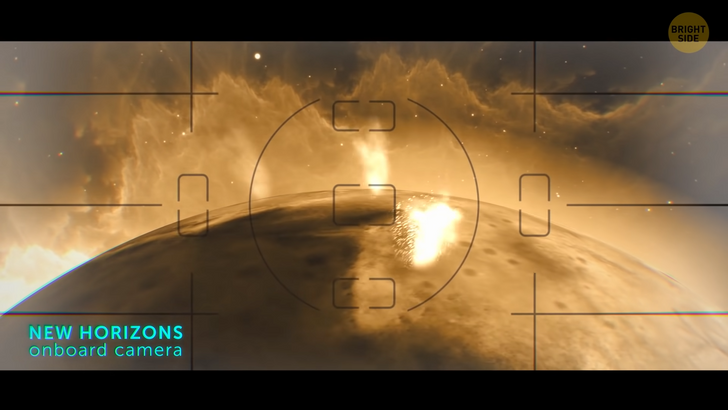
The probe also gathered a lot of amazing information about Triton. For example, it became clear that the moon is covered with cryovolcanoes. Instead of spewing molten rock, these volcanoes spit ice consisting of water, ammonia, and methane. (When the New Horizons spacecraft flew past Pluto more than 25 years later, it discovered the same phenomenon on the dwarf planet.) Anyway, to make this detour, Voyager 2 had to travel over the gas giant’s North Pole. But this changed the probe’s trajectory, deflecting it southward relative to the planes of the planets.
Since then, Voyager 2 has been moving in that direction. And now, the spacecraft is so far away that it’s out of reach of the radio antennas in the Northern Hemisphere (those in Madrid and California). This makes DSS43 (which is located in the Southern Hemisphere) the only dish powerful enough and broadcasting just the right frequency to send commands to Voyager 2. Voyager 1, the probe’s faster-traveling twin, didn’t change its trajectory.
After passing by Saturn, it took a different path. That’s why now, it can easily communicate with the two facilities in the Northern Hemisphere. The upgrade the Canberra Deep Space Communication Complex has gone through can also benefit other space missions. For example, the Mars Perseverance rover that landed on the Red Planet on February 18, 2021. The dish will also be crucial for exploring other planets and the Moon.
>>> Read full article>>>
Copyright for syndicated content belongs to the linked Source : BrightSide.me – https://brightside.me/wonder-curiosities/nasa-can-receive-signals-from-voyager-2-again-814063/



