


* . *
  • About
  • Advertise
  • Privacy & Policy
  • Contact
Sunday, February 22, 2026
Earth-News
  • Home
  • Business
  • Entertainment

    Betway Teams Up with M+C Saatchi Sport & Entertainment in Thrilling New Partnership

    Foxboro Denies Entertainment License Just Months Before World Cup Kickoff

    Wilmington Lights Up America’s 250th with Vibrant Art and Exciting Entertainment

    Josh Kesselman, Amy Zvi, and Katrina Escudero Strengthen Management Entertainment Team with Exciting New Additions

    NEED TO KNOW: Arts and culture news this week – The Frederick News-Post

    18 fun things to do in the Wilmington area this weekend – Wilmington Star-News

  • General
  • Health
  • News

    Cracking the Code: Why China’s Economic Challenges Aren’t Shaking Markets, Unlike America’s” – Bloomberg

    Trump’s Narrow Window to Spread the Truth About Harris

    Trump’s Narrow Window to Spread the Truth About Harris

    Israel-Gaza war live updates: Hamas leader Ismail Haniyeh assassinated in Iran, group says

    Israel-Gaza war live updates: Hamas leader Ismail Haniyeh assassinated in Iran, group says

    PAP Boss to Niger Delta Youths, Stay Away from the Protest

    PAP Boss to Niger Delta Youths, Stay Away from the Protest

    Court Restricts Protests In Lagos To Freedom, Peace Park

    Court Restricts Protests In Lagos To Freedom, Peace Park

    Fans React to Jazz Jennings’ Inspiring Weight Loss Journey

    Fans React to Jazz Jennings’ Inspiring Weight Loss Journey

    Trending Tags

    • Trump Inauguration
    • United Stated
    • White House
    • Market Stories
    • Election Results
  • Science
  • Sports
  • Technology

    Cushman & Wakefield Launches Groundbreaking AI Tool Amid Industry Debate Over Technology’s Impact

    Why Local Governments Are Rapidly Adopting Blockchain Technology

    Revolutionizing Data Storage: Breakthroughs in Project Silica’s Glass Technology

    Discover the Future of Policing: Join the Community Town Hall on Cutting-Edge Technology

    Cutting-Edge Election Technology Takes Center Stage at Las Vegas Summit

    Uncover the Brain’s Hidden Protein Factories with Cutting-Edge Mapping Technology

    Trending Tags

    • Nintendo Switch
    • CES 2017
    • Playstation 4 Pro
    • Mark Zuckerberg
No Result
View All Result
  • Home
  • Business
  • Entertainment

    Betway Teams Up with M+C Saatchi Sport & Entertainment in Thrilling New Partnership

    Foxboro Denies Entertainment License Just Months Before World Cup Kickoff

    Wilmington Lights Up America’s 250th with Vibrant Art and Exciting Entertainment

    Josh Kesselman, Amy Zvi, and Katrina Escudero Strengthen Management Entertainment Team with Exciting New Additions

    NEED TO KNOW: Arts and culture news this week – The Frederick News-Post

    18 fun things to do in the Wilmington area this weekend – Wilmington Star-News

  • General
  • Health
  • News

    Cracking the Code: Why China’s Economic Challenges Aren’t Shaking Markets, Unlike America’s” – Bloomberg

    Trump’s Narrow Window to Spread the Truth About Harris

    Trump’s Narrow Window to Spread the Truth About Harris

    Israel-Gaza war live updates: Hamas leader Ismail Haniyeh assassinated in Iran, group says

    Israel-Gaza war live updates: Hamas leader Ismail Haniyeh assassinated in Iran, group says

    PAP Boss to Niger Delta Youths, Stay Away from the Protest

    PAP Boss to Niger Delta Youths, Stay Away from the Protest

    Court Restricts Protests In Lagos To Freedom, Peace Park

    Court Restricts Protests In Lagos To Freedom, Peace Park

    Fans React to Jazz Jennings’ Inspiring Weight Loss Journey

    Fans React to Jazz Jennings’ Inspiring Weight Loss Journey

    Trending Tags

    • Trump Inauguration
    • United Stated
    • White House
    • Market Stories
    • Election Results
  • Science
  • Sports
  • Technology

    Cushman & Wakefield Launches Groundbreaking AI Tool Amid Industry Debate Over Technology’s Impact

    Why Local Governments Are Rapidly Adopting Blockchain Technology

    Revolutionizing Data Storage: Breakthroughs in Project Silica’s Glass Technology

    Discover the Future of Policing: Join the Community Town Hall on Cutting-Edge Technology

    Cutting-Edge Election Technology Takes Center Stage at Las Vegas Summit

    Uncover the Brain’s Hidden Protein Factories with Cutting-Edge Mapping Technology

    Trending Tags

    • Nintendo Switch
    • CES 2017
    • Playstation 4 Pro
    • Mark Zuckerberg
No Result
View All Result
Earth-News
No Result
View All Result
Home Science

Robots vs. humans: Which do children trust more when learning new information?

December 22, 2023
in Science
Robots vs. humans: Which do children trust more when learning new information?
Share on FacebookShare on Twitter

Robots versus humans: Which would children trust more when learning new information?

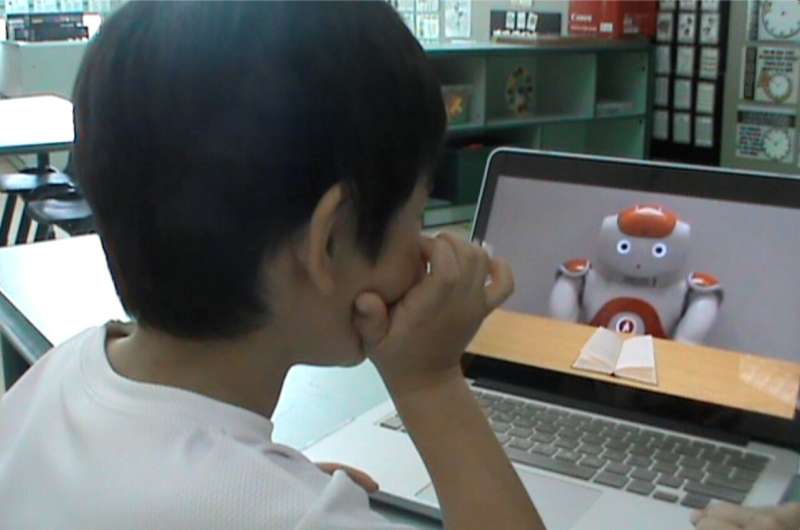
A child watching a robot provide accurate or inaccurate information. Credit: SUTD

In this digital age, children are exposed to overwhelming amounts of information online, some of it unverified and increasingly generated by non-human sources, such as AI-driven language models. As children grow older, the ability to assess a source’s reliability is an important skill in cultivating critical thinking.

Children aged 3 to 5 years display selective trust based on the informant’s past accuracy when faced with both humans and robots, according to a study published in the journal Child Development titled, “Younger, not older, children trust an inaccurate human informant more than an inaccurate robot informant.”

“Children do not just trust anyone to teach them labels, they trust those who were reliable in the past. We believe that this selectivity in social learning reflects young children’s emerging understanding of what makes a good (reliable) source of information,” explained Li Xiaoqian, a research scholar at Singapore University of Technology and Design (SUTD) who co-authored the study with her Ph.D. supervisor Professor Yow Wei Quin, a psychology professor and head of Humanities Arts and Social Sciences cluster at SUTD. “The question at stake is how young children use their intelligence to decide when to learn and whom to trust.”

In the study, participants from Singapore preschools such as ChildFirst, Red SchoolHouse and Safari House, aged between 3 and 5, were split below and above the median age of 4.58 years old into “younger” and “older” cohorts respectively.

They were paired with a robot or human informant, which either provided accurate or inaccurate labels to objects, such as “ball” or “book.” The researchers then tested to see if the informant’s identity (human or robot) and track record as a reliable informant as well as the child’s age influenced the child’s trust in the informant to label things correctly in the future.

Participants were presented with only one informant during the study, and their trust was measured by their willingness to accept new information. The humanoid social robot by SoftBank Robotics, NAO, which has a human-like but robotic voice, was used as the robot informant.

To keep conditions comparable, the human informant matched her movements to those of the robot. An experimenter was also seated next to the participant to ask the necessary questions, so that the participant would not feel pressured to agree with the informant.

The study revealed that children were willing to accept new information from both human and robot informants who had previously given accurate information, but not from a potentially unreliable informant who had made mistakes in the past—especially when the informant was a robot. As for the age effect, the authors reported that younger children were likelier to accept information from an unreliable human than an unreliable robot, but older children were found to distrust or reject information from an unreliable informant, human or robot.

“These results implicate that younger and older children may have different selective trust strategies, especially the way they use informants’ reliability and identity cues when deciding who to trust. Together with other research on children’s selective trust, we show that as children get older, they may increasingly rely on reliability cues to guide their trust behavior,” said Dr. Li.

Previous research has shown that children rely on factors such as age, familiarity, and language to figure out whether an informant is reliable or not. It may be that younger children rely on identity cues like these more than they do epistemic evidence. As they get older, children place more emphasis on “what you know” than “who you are” when deciding to trust an informant.

This is the first study to ask the questions: (1) Do children draw different inferences about robots with varying track records of accuracy? and (2) Are these inferences comparable to those about humans?

“Addressing these questions will provide a unique perspective on the development of trust and social learning among children who are growing up alongside various sources of information, including social robots,” said Prof Yow.

This research has significant implications for pedagogy, where robots and non-human educational tools are increasingly integrated into the classroom. Children today may not perceive robots as trustworthy as humans if they have not interacted much with robots. However, as children gain more exposure to smart machines, they could be inclined to see robots as intelligent and reliable sources of knowledge.

Future studies could explore the selective learning development theory beyond the scope of word learning, such as tool usage, emotional expression congruency, or episodic domains such as location learning. For now, the researchers hope that their findings are considered in the realm of design pedagogy.

“Designers should consider the impact of perceived competence when building robots and other AI-driven educational tools for young children. Recognizing the developmental changes in children’s trust of humans versus robots can guide the creation of more effective learning environments, ensuring that the use of technologies aligns with children’s developing cognitive and social needs,” said Prof Yow.

More information:
Xiaoqian Li et al, Younger, not older, children trust an inaccurate human informant more than an inaccurate robot informant, Child Development (2023). DOI: 10.1111/cdev.14048

Citation:
Robots vs. humans: Which do children trust more when learning new information? (2023, December 22)
retrieved 22 December 2023
from https://phys.org/news/2023-12-robots-humans-children.html

This document is subject to copyright. Apart from any fair dealing for the purpose of private study or research, no
part may be reproduced without the written permission. The content is provided for information purposes only.

>>> Read full article>>>
Copyright for syndicated content belongs to the linked Source : Phys.org – https://phys.org/news/2023-12-robots-humans-children.html


Tags: Humansrobotsscience
Previous Post

High-sensitivity visualization of ultrafast carrier diffusion by wide-field holographic microscopy

Next Post

Researchers use VLT exoplanet hunter to study Jupiter’s winds

Robin Greenfield, the ‘Forrest Gump of Ecology,’ Brings Wild Food Adventure to Brevard

February 21, 2026

Discover the Gut’s Hidden Communication Network That Shields You from Inflammatory Intestinal Disorders

February 21, 2026

Schubert Biochemistry Lab Sparks Groundbreaking Advances in Science and Patient Care

February 21, 2026

Poll Reveals Growing Concern: Middle-Class Lifestyle Slipping Further Out of Reach for Voters

February 21, 2026

World Cup Fan Fest in New York/New Jersey Canceled: What You Need to Know

February 21, 2026

7 Crucial Insights on Trump’s Tariffs After the Supreme Court Decision

February 21, 2026

Betway Teams Up with M+C Saatchi Sport & Entertainment in Thrilling New Partnership

February 21, 2026

Snowmobile Accidents Soar by 150% in Munson Health System Region

February 21, 2026

White House dinner closes a turbulent week for governors in Washington – goSkagit

February 21, 2026

Cushman & Wakefield Launches Groundbreaking AI Tool Amid Industry Debate Over Technology’s Impact

February 21, 2026

Categories

Archives

February 2026
M T W T F S S
 1
2345678
9101112131415
16171819202122
232425262728  
« Jan    
Earth-News.info

The Earth News is an independent English-language daily published Website from all around the World News

Browse by Category

  • Business (20,132)
  • Ecology (1,084)
  • Economy (1,101)
  • Entertainment (21,978)
  • General (20,021)
  • Health (10,142)
  • Lifestyle (1,117)
  • News (22,149)
  • People (1,108)
  • Politics (1,118)
  • Science (16,316)
  • Sports (21,603)
  • Technology (16,083)
  • World (1,093)

Recent News

Robin Greenfield, the ‘Forrest Gump of Ecology,’ Brings Wild Food Adventure to Brevard

February 21, 2026

Discover the Gut’s Hidden Communication Network That Shields You from Inflammatory Intestinal Disorders

February 21, 2026
  • About
  • Advertise
  • Privacy & Policy
  • Contact

© 2023 earth-news.info

No Result
View All Result

© 2023 earth-news.info

No Result
View All Result

© 2023 earth-news.info

Go to mobile version